
The blocky black-and-white square has been the default QR code look for over a decade. Most people stopped seeing it a long time ago, and this is the problem stylish QR codes are trying to fix.
A stylish QR code trades sharp corners for rounded ones, picks up brand colors, or blends in a photo, all while staying readable to a phone camera or scanner. The question isn’t whether it looks better, which it definitely does. The question is whether stylish QR Codes get scanned more, and that’s harder to prove than most design blogs make it sound.
This comparison lines up traditional and stylish QR codes across design, scan rates, and how each one holds up once it’s out in a campaign, so you’re picking based on what works and not just what looks nicer in a mockup.
What Makes a QR Code “Traditional” and What Makes It “Stylish”
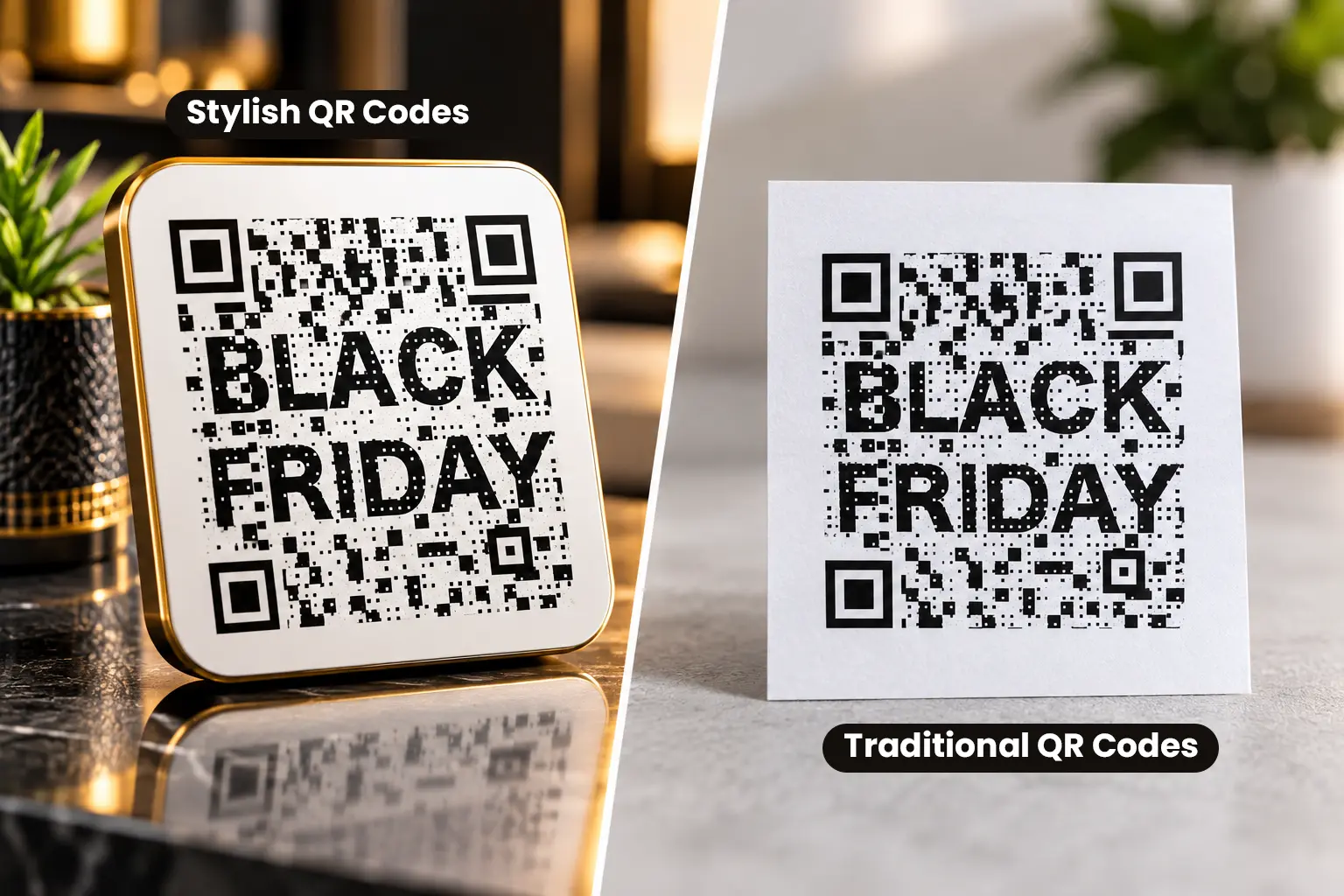
A traditional QR code uses the standard black modules on a white background, with square corners and no visual branding whatsoever. It’s the format most scanning apps were originally designed around. It also remains the default whenever reliability and scanability of a code hold more importance than appearance, such as on shipping labels or internal warehouse systems.
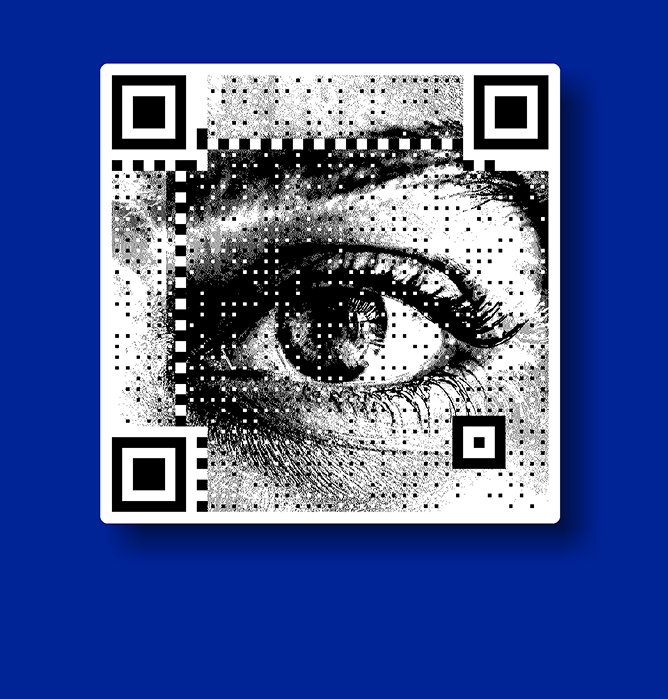
A stylish QR code keeps the same underlying data structure but changes its appearance: rounded dots, custom colors, embedded logos, or even a photo woven into the background pattern itself.
The photo-embedded style QR Codes are a good example. Here, an image is layered behind the scan pattern while keeping the core function untouched. None of these visual changes alter what happens after the scan; the phone still reads the same encoded data either way. A well-designed stylish QR Code doesn’t just make the QR Code worth noticing, but it also retains the scannability and reliability of the QR Code.
Traditional vs Stylish QR Codes: A Side-by-Side Comparison
Both formats scan the same way technically. However, they perform differently depending on where they are placed and how they’re used.
| Factor | Traditional QR code | Stylish QR code |
| Visual appeal | Plain, generic | Branded, eye-catching |
| Scan reliability | Very high | High, if designed correctly |
| Setup time | Instant | Slightly longer |
| Best for | Quick, functional use | Marketing, packaging, events |
| Brand recognition | None | Strong, if logo or colors used |
Do Stylish QR Codes Actually Get More Scans?
People are more likely to notice and engage with something that looks intentional rather than generic, which is where stylish codes tend to pull ahead in practice.
- Attention on cluttered surfaces: a colorful, branded code stands out on a busy poster or shelf
- Perceived trustworthiness: a code that matches brand colors feels less like a random sticker
- Curiosity factor: photo-embedded codes tend to draw a second look before people scan
- Consistency across materials: matching brand colors reinforces recognition across flyers and packaging
- No real scan-rate penalty: properly built stylish codes scan just as fast as plain ones
When are Traditional QR Codes Still Useful
Style isn’t always the right call, and plain codes are still relevant in a few specific situations.
- Government forms, invoices, or anything requiring a neutral, formal appearance
- Situations where the code needs to print reliably in black-and-white only
- Quick internal use, like linking a warehouse label to inventory software
- Extremely small print sizes, where added visual detail can hurt legibility
The Reason Why Stylish Codes Get Noticed
People scan past dozens of plain black squares every week without registering most of them consciously, since the format has become visual wallpaper. A code that breaks that pattern, through color, shape, or an embedded photo, briefly interrupts that autopilot response and earns a second look.
This isn’t unique to just QR codes; it’s the same reason a colorful package stands out on a gray shelf. The trick is making sure that moment of curiosity is followed by a code that works when someone commits to scanning it.
Which Industries Are Leading the Shift to Stylish QR Codes
Fashion, hospitality, food and beverage, and event marketing have moved fastest toward stylish formats, largely because visual identity already drives so much of their customer experience. A boutique hotel embedding a property photo into its check-in QR code feels consistent with the rest of its branding, while a plain black square would feel out of place.
Manufacturing and logistics, by contrast, still lean heavily on traditional codes, since those scans often happen on warehouse floors where speed and reliability matter more than visual appeal.
How to Create a Stylish QR Code That Still Scans
Building a stylish QR code generator output that works takes a bit more care than a plain black square.
Step 1: Start with High Error Correction
Set error correction to High before adding any color or logo elements, since styling covers more of the pattern than a plain code would otherwise use.
Step 2: Choose Colors with Strong Contrast
Dark foreground modules against a light background remain the safest combination. Avoid pairing two mid-tone colors, since scanners rely on clear contrast to separate the pattern from its background.
Step 3: Add a Logo or Photo Thoughtfully
Keep any embedded image centered and reasonably small relative to the overall code. Some QR code generators have a photo-embedding feature built specifically to preserve scannability while still looking distinctly branded.
Step 4: Test Across Devices and Lighting
Scan the finished design under different lighting conditions and on multiple phone brands. Glossy print finishes and dim lighting reveal contrast problems that a screen preview won’t show you.
Step 5: Print at the Right Size
Larger, more detailed stylish codes need a bit more physical size than plain ones to remain scannable from a normal distance.
Cost Considerations: Is Styling Worth the Extra Effort?
Styling a QR code rarely costs more money directly, since most generators bundle color and photo customization into the same free tier as plain codes. The cost is time: choosing colors, testing contrast, and confirming scannability across devices takes a few extra minutes compared to generating a default black-and-white square.
For a one-time internal use case, that time might not be worth spending. For anything customer-facing, from packaging to a storefront window, the small time investment tends to pay off through better engagement and stronger brand recall.
Wrapping Up: Style and Function Aren’t Opposites
A stylish QR code can absolutely get more scans, but only when the design respects the same fundamentals a plain code depends on: contrast, error correction, and testing. Looks alone won’t save a code that scanners can’t read.
QRKY’s stylish QR code generator handles the technical safeguards automatically, so photo-embedded and branded codes stay just as reliable as the plain ones.
Frequently Asked Questions
Do stylish QR codes take longer to scan than traditional ones?
Not noticeably, as long as contrast and error correction are set up correctly from the start. Poorly designed stylish codes can slow scanning down, but a well-built one performs almost identically to a plain black-and-white code.
Are stylish QR codes more expensive to create than traditional ones?
Not usually, since most generators, including QRKY, offer stylish customization within the same free tier as plain codes. Pricing differences typically come from dynamic tracking features and analytics, rather than from visual styling itself.
Can I turn an existing traditional QR code into a stylish one?
Not by editing the image file directly, since styling changes the underlying generation process itself. You’ll need to recreate the code from the original link, using a generator that specifically supports stylish output.
Do stylish QR codes work well on small products like bottle labels?
They can, but smaller surfaces need simpler styling with fewer decorative elements involved. Heavy photo backgrounds tend to lose clarity at very small sizes, so plainer stylish designs tend to scan more reliably there instead.
Which industries benefit most from stylish QR codes over traditional ones?
Retail, hospitality, events, and fashion brands tend to see the biggest benefit, since visual branding already matters heavily in those spaces. Purely functional, internal-use codes rarely need or benefit from the extra design effort.