
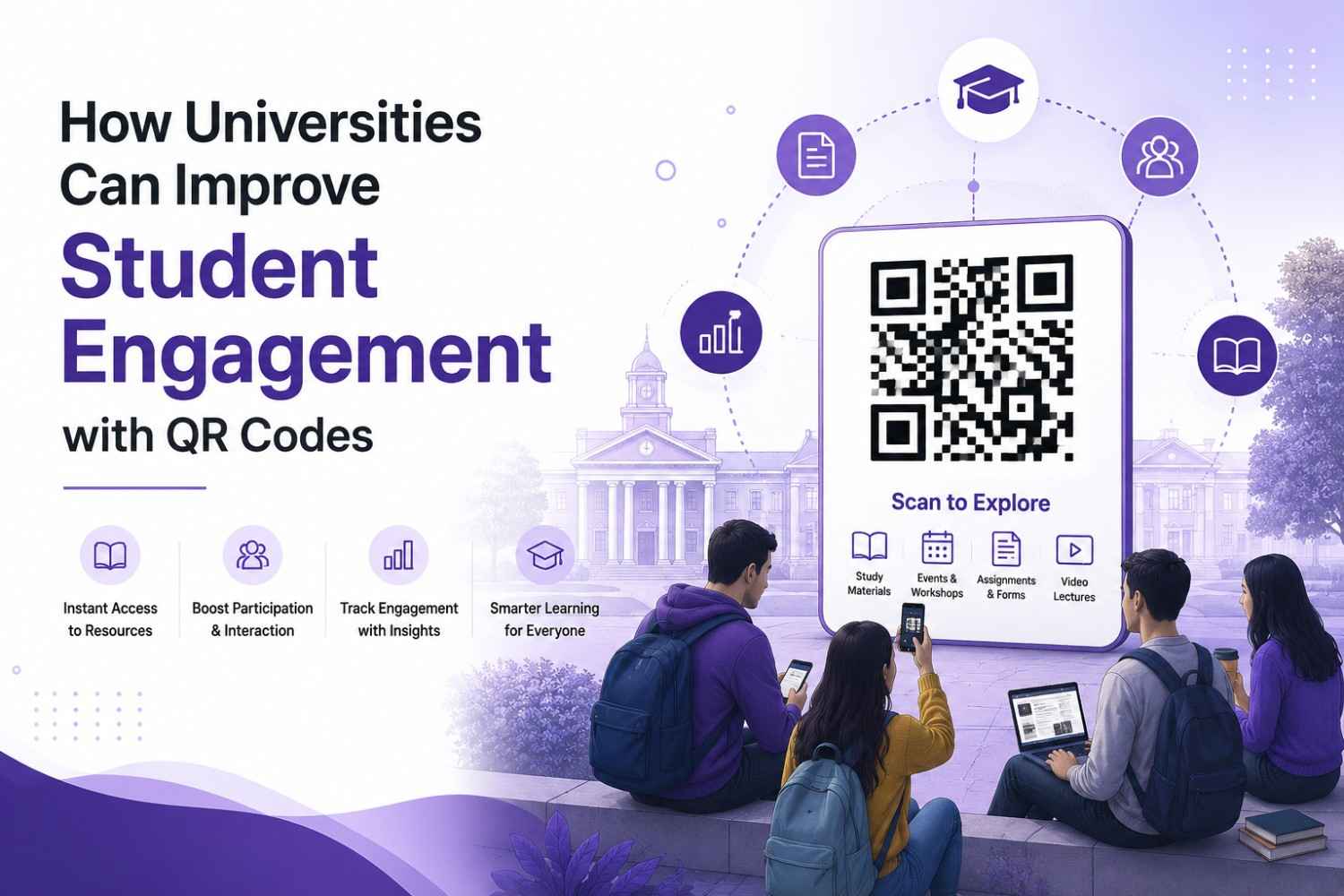
Student engagement has become one of the biggest priorities for universities worldwide. Traditional methods of sharing information, collecting feedback, and delivering learning resources are gradually being replaced by digital-first experiences. Today’s students expect instant access to course materials, campus information, and interactive learning tools using their smartphones.
This is where QR codes are making a significant difference. By simply scanning a code, students can access lecture notes, attendance forms, event registrations, assignments, digital libraries, and much more within seconds.
A well-implemented qr code for students not only simplifies communication but also creates a more engaging and connected learning environment. Combined with a dynamic qr code, universities can update information in real time without reprinting posters, brochures, or study materials.
In this guide, we’ll explore how universities can improve student engagement through QR codes, real-world applications, and best practices for implementation.
Student engagement directly influences academic performance, retention rates, and overall campus experience. Engaged students participate more actively in learning, collaborate with peers, and are more likely to complete their programs successfully.
According to the National Survey of Student Engagement (NSSE), students who actively engage with learning activities and campus resources report higher satisfaction levels and stronger academic outcomes.
Additionally, UNESCO estimates that over 70% of young adults worldwide own a smartphone, making mobile-first educational experiences increasingly practical and accessible.
Since nearly every student already carries a smartphone, QR codes provide a natural bridge between physical and digital learning.
What Is a QR Code for Students?
A qr code for students is a scannable code that instantly directs students to digital content such as:
- Lecture notes
- PDF study materials
- Assignment portals
- Online quizzes
- Video lectures
- Attendance forms
- Course schedules
- Campus maps
- Digital libraries
- Faculty contact information
Instead of typing long URLs or downloading multiple apps, students simply scan a QR code using their smartphone camera.
How Dynamic QR Codes Improve Student Engagement
Unlike static QR codes, a dynamic qr code allows universities to change the destination link even after the code has been printed.
For example, a QR code displayed outside a classroom can point to:
- Week 1 lecture slides
- Week 2 assignments
- Mid-semester resources
- Final revision notes
The QR code remains the same while the linked content changes behind the scenes.
This flexibility helps universities reduce printing costs while ensuring students always receive the latest information.
Additional benefits include:
- Real-time content updates
- Scan analytics
- Editable destinations
- Better campaign tracking
- Long-term usability
Practical Ways Universities Can Use QR Codes
Share Study Materials
Professors can place QR codes on classroom boards, presentations, or handouts that link directly to:
- PDFs
- PowerPoint presentations
- Research papers
- Reading lists
- Recorded lectures
Students gain immediate access without searching through emails or learning portals.
Simplify Attendance
Instead of paper attendance sheets, instructors can display a QR code that links to an attendance form.
This saves classroom time while automatically recording attendance digitally.
Improve Campus Navigation
Large campuses can be difficult for new students to navigate.
QR codes placed around campus can provide:
- Interactive maps
- Building directions
- Department information
- Library locations
- Emergency contacts
This significantly improves the onboarding experience for freshmen and visiting students.
Boost Event Participation
Universities organize numerous events including:
- Workshops
- Guest lectures
- Career fairs
- Cultural festivals
- Alumni meets
A QR code on posters allows students to instantly:
- Register
- Save the event
- View schedules
- Receive reminders
Removing registration friction increases participation.
Collect Student Feedback
Student feedback is essential for improving teaching quality.
QR codes can link directly to anonymous feedback forms after:
- Classes
- Workshops
- Campus events
- Orientation sessions
Because the process takes only a few seconds, response rates often improve compared to emailed surveys.
Enhance Library Access
QR codes placed on bookshelves or library catalogs can connect students to:
- Digital copies
- E-books
- Research journals
- Citation tools
- Related resources
Libraries become more interactive while improving access to digital collections.
Connect Students with Career Services
Career centers can place QR codes on notice boards linking to:
- Internship applications
- Resume templates
- Placement portals
- Career counseling bookings
- Employer webinars
Students receive immediate access to valuable career resources.
Real-World Statistics Supporting QR Code Adoption
The increasing popularity of QR codes reflects changing user behavior across industries, including education.
Some noteworthy statistics include:
- According to Statista, QR code scans worldwide have grown significantly over the past several years as smartphone adoption has increased.
- Juniper Research estimated that the number of QR code coupon redemptions alone would exceed 5.3 billion globally, highlighting widespread consumer familiarity with QR technology.
- According to GSMA, smartphone adoption worldwide continues to exceed 70%, making QR code accessibility nearly universal among university-age students.
- The NSSE consistently reports that increased digital engagement contributes positively to student satisfaction and learning experiences.
These trends suggest that QR codes are no longer viewed as a novelty but as an expected part of modern digital interactions.
Best Practices for Using QR Codes in Universities
To maximize effectiveness, universities should follow these best practices.
Use Dynamic QR Codes
A dynamic qr code enables updates without replacing printed materials.
Keep Landing Pages Mobile-Friendly
Students scan using smartphones, so content should load quickly and display properly on mobile devices.
Add Clear Call-to-Action Text
Instead of displaying only the QR code, include instructions such as:
- Scan to Download Notes
- Scan for Attendance
- Scan to Register
- Scan for Assignment
This encourages more scans.
Track Performance
Dynamic QR codes provide analytics such as:
- Number of scans
- Device types
- Locations
- Time of scans
Universities can use this data to improve student engagement strategies.
Ensure Accessibility
Always provide an alternative URL for students who may experience scanning difficulties.
The Future of Student Engagement with QR Codes
As universities continue embracing digital transformation, QR codes will become even more integrated into everyday campus life.
Future applications may include:
- AI-powered personalized learning
- Smart campus navigation
- Interactive laboratory experiences
- Digital student IDs
- Virtual campus tours
- Augmented reality learning
- Personalized academic dashboards
The combination of mobile technology and dynamic QR codes creates opportunities for universities to deliver more engaging, flexible, and student-centered learning experiences.
Conclusion
Modern students expect seamless digital experiences, and universities must adapt to meet these expectations. Implementing a qr code for students provides an easy and cost-effective way to share learning resources, simplify administrative tasks, and increase participation across campus.
When paired with a dynamic qr code, universities gain the flexibility to update content instantly, monitor engagement, and deliver more personalized experiences without additional printing costs.
From classrooms and libraries to campus events and career services, QR codes help create a smarter, more connected educational environment that benefits both students and institutions.
Frequently Asked Questions (FAQs)
1. What is a QR code for students?
A qr code for students is a scannable code that provides instant access to digital resources such as lecture notes, assignments, attendance forms, videos, and campus information using a smartphone.
2. What is the difference between a static and a dynamic QR code?
A static QR code links to fixed content that cannot be changed after creation. A dynamic qr code allows the destination URL to be updated anytime without changing the printed QR code.
3. Can universities track QR code usage?
Yes. Dynamic QR codes offer analytics including scan counts, locations, devices used, and scan times, helping universities measure student engagement.
4. Are QR codes secure for educational use?
Yes. When generated through a trusted QR code platform and linked to secure university resources, QR codes are a safe and reliable way to share educational content.
5. What resources can be shared using QR codes?
Universities can share lecture notes, PDFs, video lectures, attendance forms, library resources, campus maps, event registrations, research papers, internship opportunities, and much more through QR codes.