
Choosing between a static and a dynamic QR code for business may seem like a small technical decision. In reality, it can directly impact how effectively you engage customers, track performance, and optimize your marketing efforts.
As businesses increasingly rely on tools that bridge offline and online interactions, QR codes have become a key part of that ecosystem. But not all QR codes function the same way.
Understanding the difference between a static vs. dynamic QR code is essential for making the right choice based on your business goals.
What is a Static QR Code?
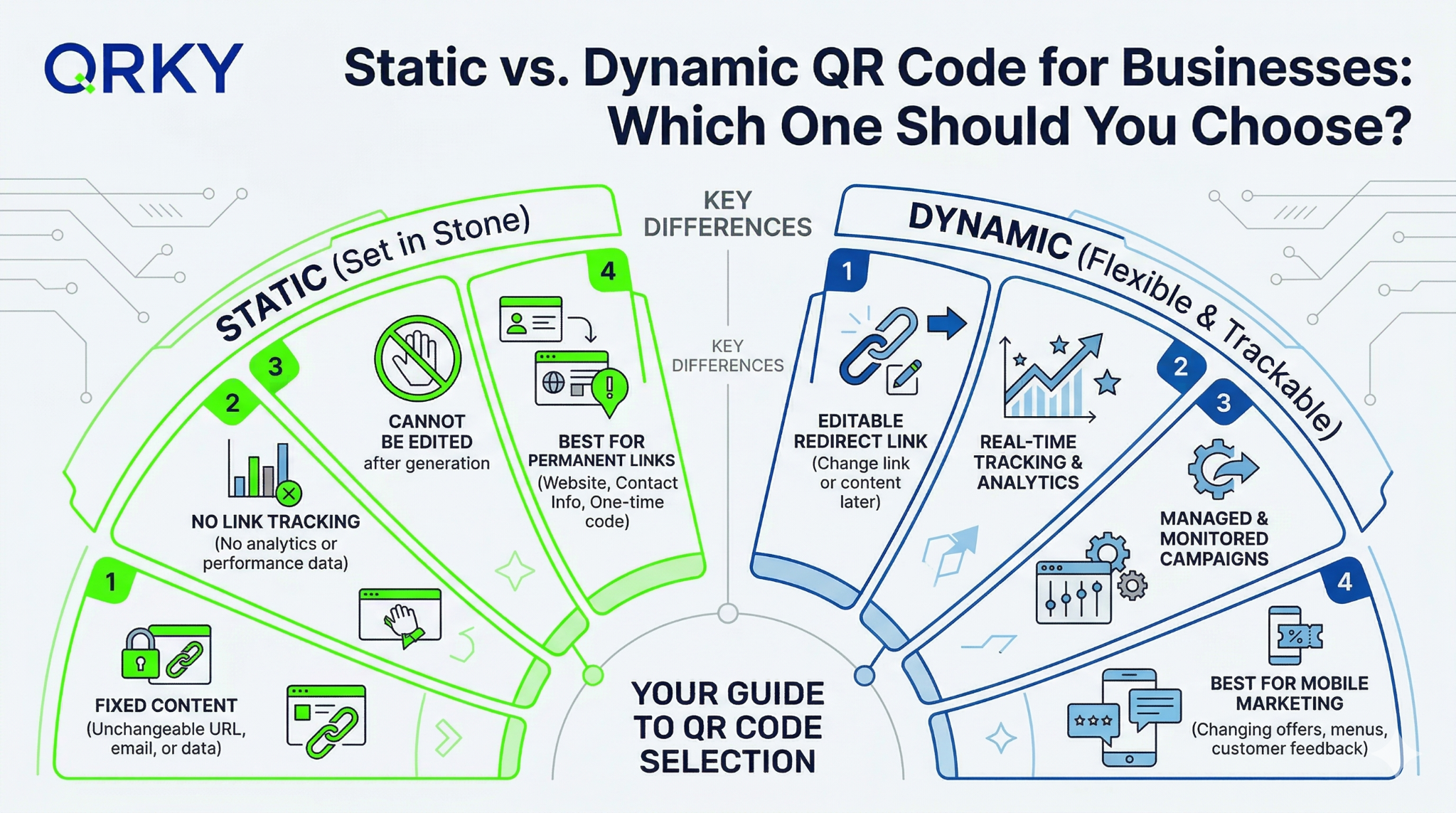
A static QR code is fixed. Once you generate it, the content or link behind it cannot be changed.
For example, if you create a QR code that links to your website homepage or a product page, that destination remains permanent. If the link changes or becomes outdated, the QR code will no longer function as intended.
Where Static QR Codes Work Best
Static QR codes are ideal for situations where:
- The content is permanent
- No updates are required
- Tracking is not a priority
Common business use cases include:
- Product packaging with fixed information
- Printed manuals or instructions
- Permanent store links
- Basic informational materials
They are quick to create and easy to deploy.
However,there’s a limitation:
Static QR codes do not provide any analytics.
You won’t know:
- How many users scanned the code
- When the scans occurred
- What actions users took
What is a Dynamic QR Code?
A dynamic QR code for business offers flexibility and control.
Unlike static codes, you can:
- Change the destination link anytime
- Update content without reprinting the code
- Track detailed scan data
This makes dynamic QR codes far more suitable for businesses that want to optimize performance and engagement.
What Dynamic QR Codes Enable
Dynamic QR codes unlock several capabilities:
- Real-time updates: Modify links even after distribution
- Analytics tracking: Monitor scans by time, location, and device
- Performance measurement: Understand engagement levels
- Campaign optimization: Improve results based on data
For example, a business running a campaign can initially link a QR code to:
- A product launch page
Later, the same QR code can be updated to:
- A promotional offer
- A feedback form
- A loyalty program
All without changing the printed or published code.
Static vs. Dynamic QR Codes: Key Differences
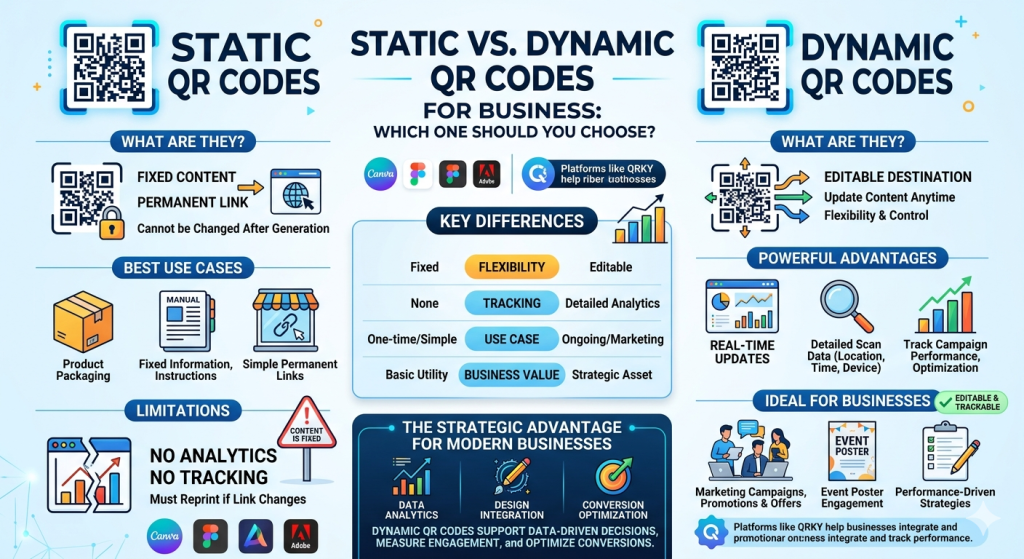
Understanding the distinction becomes easier when compared directly. When evaluating a static vs dynamic QR code, businesses should consider the following:
Flexibility
Static QR codes are fixed. Dynamic QR codes can be updated anytime.
Tracking
Static codes offer no insights. Dynamic QR codes provide detailed analytics.
Use Case
Static codes are suited for one-time or permanent use. Dynamic codes are ideal for ongoing campaigns and marketing efforts.
Business Value
Dynamic QR codes are widely used in professional marketing for their optimization and scalability.
Why Dynamic QR Codes Matter for Businesses
Modern businesses operate in an environment where data-driven decisions are critical.
Dynamic QR codes enable businesses to:
- Measure campaign effectiveness
- Understand customer behaviour
- Optimize engagement strategies
For example, a retail brand using QR codes on packaging can track:
- Which locations generate the most scans
- What time do customers engage
- Which campaigns drive conversions
This level of insight transforms QR codes from a simple utility into a strategic marketing asset.
Enhancing QR Codes with Design Tools
Businesses today already use tools like:
- Canva for marketing creatives
- Figma for UI/UX design
- Adobe tools for advanced design work
When QR codes are integrated thoughtfully into these designs, they become more than just functional elements.
They can:
- Blend seamlessly into visuals
- Improve scan visibility
- Enhance user experience
For example, a well-designed poster with an embedded QR code and a clear call-to-action can significantly outperform a plain QR placement.
The Strategic Advantage of Platforms Like QRKY
While creating QR codes is simple, using them effectively requires strategy.
Platforms like QRKY help businesses:
- Embed QR codes directly into high-attention areas of creatives
- Improve scan rates through better design integration
- Access analytics such as scan-to-result and conversions
This ensures that QR codes are not just placed—but optimized for performance.
When Should You Choose Static QR Codes?
Choose static QR codes if:
- Your content is final and unlikely to change
- You do not require tracking or analytics
- The use case is simple and one-time
When deciding between a static vs dynamic QR code, businesses focused on growth and performance will often benefit more from dynamic solutions.
Ideal for:
- Instructional materials
- Fixed product information
- Permanent links
When Should You Choose Dynamic QR Codes?
Choose a dynamic QR code for business if:
- You need flexibility to update content
- You want to track user behaviour
- You are running marketing campaigns
- You aim to improve engagement and conversions
Ideal for:
- Promotions and offers
- Event campaigns
- Customer engagement initiatives
- Performance-driven marketing
Final Thoughts
The choice between a static vs. dynamic QR code is not just technical but also strategic.
Static QR codes are simple and useful for fixed, straightforward applications.
A dynamic QR code for business, however, offers the flexibility, insights, and optimization capabilities that modern businesses need.
For businesses looking to:
- Improve engagement
- Track performance
- Adapt quickly
Dynamic QR codes provide a clear advantage.
With platforms like QRKY, businesses can go beyond basic implementation and create QR-driven experiences that are measurable, adaptable, and impactful.
In many cases, a single well-placed QR code can do more than just connect—it can convert, inform, and drive long-term value.
.
FAQs:
1. What is the difference between a static and a dynamic QR code for businesses?
The key difference in static vs dynamic QR codes lies in flexibility. A static QR code cannot be edited after creation, while a dynamic QR code for business allows updates to links and content anytime. With QRKY, students can experiment with both and understand real-world use cases.
2. Why should students learn about dynamic QR codes for business use cases?
Understanding a dynamic QR code for business helps students build practical marketing and tech skills. Using QRKY, they can create editable QR campaigns for projects, portfolios, or case studies, making their work more interactive and aligned with how modern businesses operate.
3. When should a business choose a static vs. a dynamic QR code?
In static vs dynamic QR code decisions, static codes are useful for simple, permanent links, while dynamic QR codes are better for campaigns that may change over time. QRKY helps students explore both options and apply them in real-world business scenarios.
4. How can students use QRKY to create a dynamic QR code for business projects?
Students can use QRKY to create a dynamic QR code for business assignments and embed it into designs using tools like Canva, Figma, or Adobe. This helps them showcase practical skills in presentations and build strong portfolios that stand out to recruiters.
5. Can learning static vs dynamic QR codes help students earn or gain opportunities?
Yes, students who understand static vs dynamic QR code concepts can help small businesses, college events, or startups choose the right solution. With QRKY, they can even explore freelance work, side income, or limited student ambassador opportunities while gaining hands-on experience.