
For decades, offline marketing lived in a measurement blind spot.
Billboards built awareness.
Events built presence.
Print built credibility.
But none of them built reliable attribution.
Marketing teams spoke about visibility. Finance teams asked about accountability. And somewhere between those two conversations, real performance insight got lost. Today, that gap is closing.
Modern attribution tools, data layers, and QR-enabled touchpoints are allowing organizations to connect physical campaigns to measurable outcomes. Offline marketing is no longer a leap of faith — it is becoming a trackable lever for growth.
Why Offline Attribution Has Always Been a CFO Challenge
From a finance perspective, the core issue with offline marketing has never been effectiveness — it has been traceability.
A customer may see a poster and purchase it later online.
An event interaction may convert months afterward.
A brochure may influence a high-value deal indirectly.
These actions generate revenue signals, but without data capture, they remain invisible to reporting systems.
Without attribution, marketing spend appears as a fixed cost. With attribution, it becomes an investment with a measurable return.
That distinction is what separates budget defense from budget growth.
What Offline-to-Online Attribution Actually Means
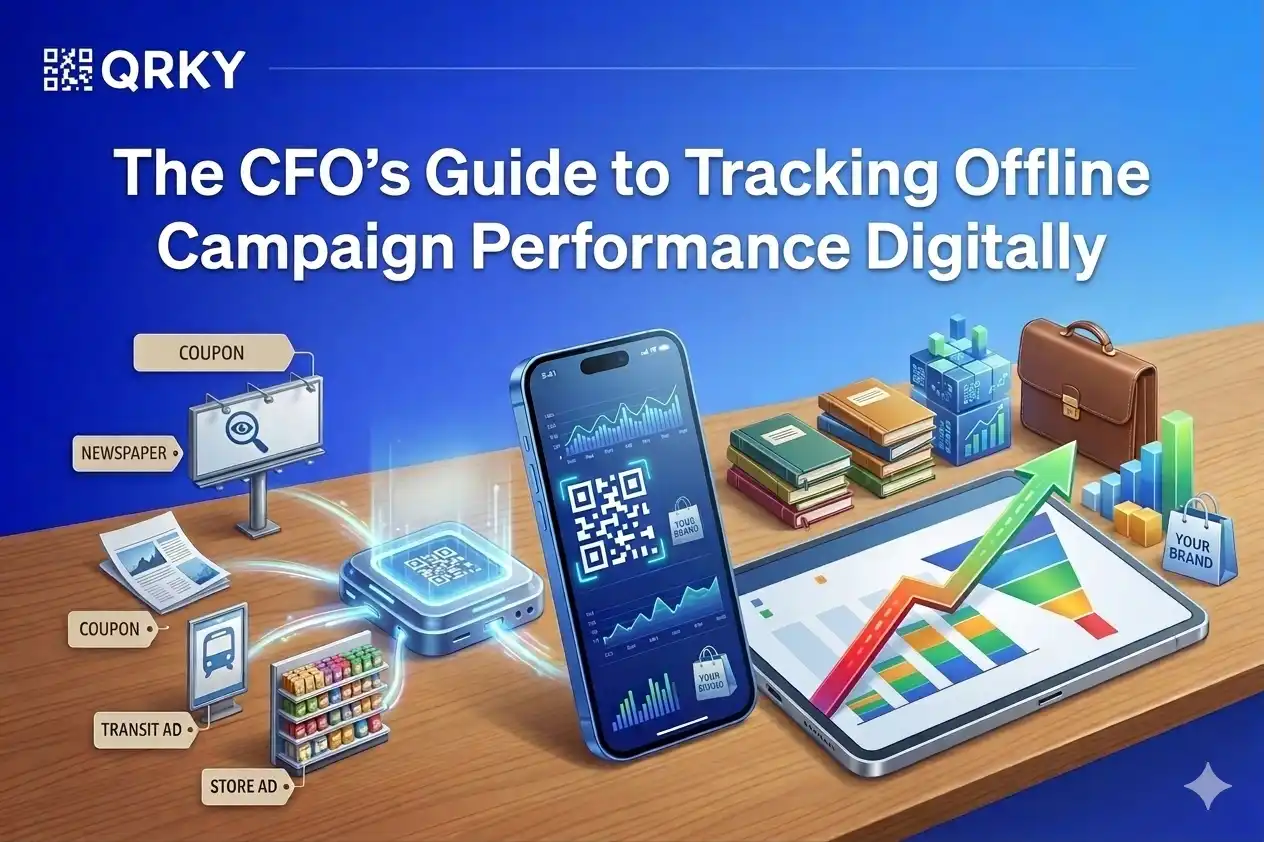
Offline-to-online attribution is the process of linking physical marketing exposure to digital behavior and financial outcomes.
This connection is created when a physical touchpoint triggers a measurable digital action — such as a scan, visit, registration, or purchase — often enabled through a QR code for marketing that links offline engagement directly to digital activity.
Once that bridge exists, the entire campaign becomes analyzable.
Organizations can now track:
- Which physical assets drove engagement
- Which locations produced qualified leads
- Which touchpoints influenced conversions
- Which channels produced a revenue lift
Offline activity stops being anecdotal and starts becoming data.
How Modern Attribution Models are Evolving
Traditional marketing attribution models were built for digital environments.
First-click attribution rewarded discovery.
Last-click attribution rewarded conversion.
Multi-touch attribution attempted to balance the journey.
But none of these models originally accounted for physical interactions.
Today’s enterprise marketing attribution models are expanding to include offline signals by integrating:
- QR-triggered interactions powered by a QR code for marketing
- Location-based campaign data
- Scan-to-journey behavior tracking
- Cross-device conversion paths
This hybrid attribution approach allows executives to see how offline exposure contributes to pipeline creation, deal velocity, and lifetime value.
For CFOs, this means attribution is no longer theoretical — it is auditable.
The Executive Value of Digital Attribution for Offline Campaigns
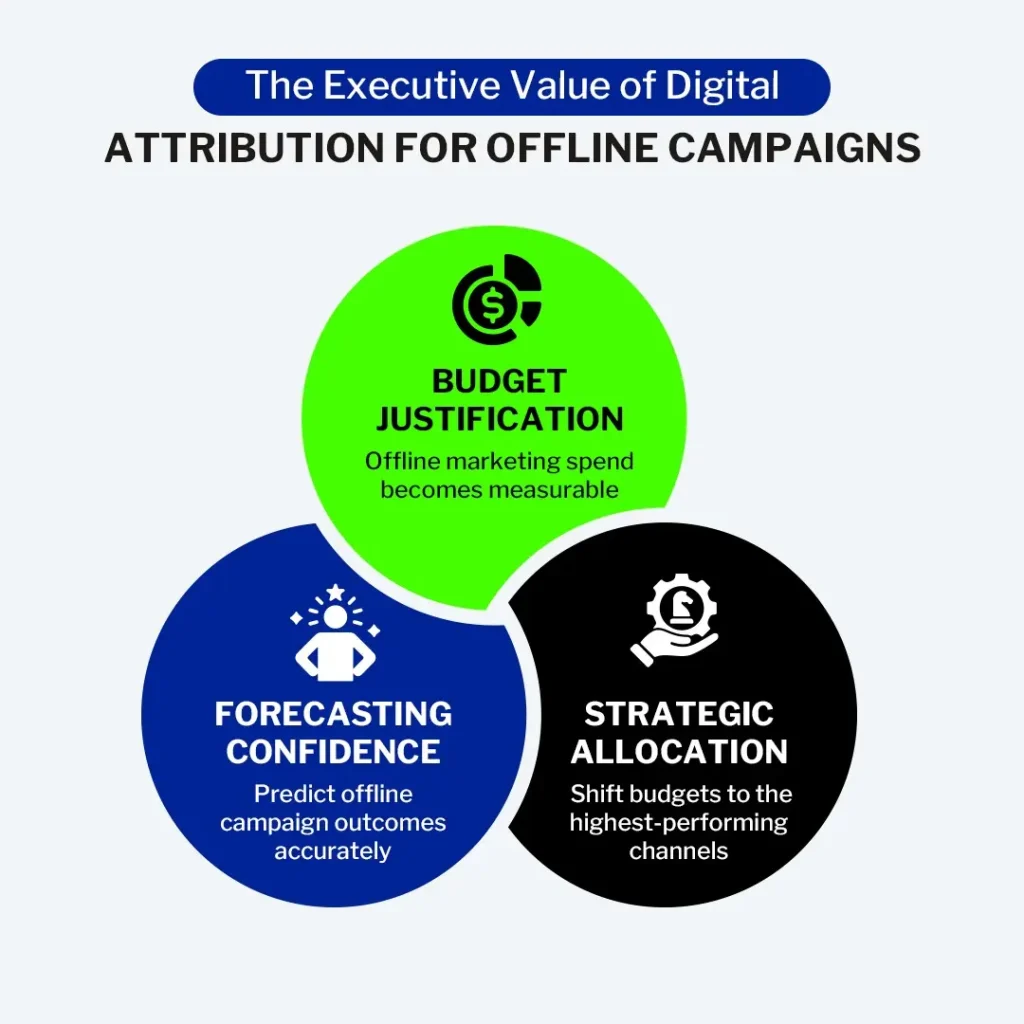
When offline campaigns become measurable, they begin to serve three strategic functions:
1. Budget Justification
Once performance data exists, offline campaigns, especially those powered by a QR code for marketing, can be evaluated on cost per acquisition, revenue influence, and conversion efficiency.
Marketing spend becomes explainable, comparable, and defendable.
2. Strategic Allocation
With visibility into performance, leadership teams can shift investment toward the highest-yield physical channels — whether that’s retail placements, events, packaging, or print.
Decisions move from instinct to evidence.
3. Forecasting Confidence
When attribution data accumulates over time, organizations can begin predicting offline performance outcomes with greater accuracy.
This transforms marketing planning from reactive budgeting into strategic forecasting.
Why Enterprise Teams Are Prioritizing Attribution Infrastructure
Leading organizations are no longer treating attribution as a reporting exercise. They are treating it as operational infrastructure.
- Marketing teams use attribution to refine campaigns
- Sales teams use attribution to understand lead origins
- Finance teams use attribution to connect spend to revenue outcomes
- Leadership teams use attribution to guide growth strategy
Companies that build attribution systems early gain a long-term advantage: they learn faster, optimize sooner, and allocate capital more intelligently.
This is why modern marketing analytics for executives increasingly includes offline data streams alongside digital dashboards.
From Visibility to Accountability
When offline marketing becomes measurable, something important happens inside the organization.
Marketing stops being evaluated on activity.
It starts being evaluated on outcomes.
That shift changes the conversation in leadership meetings.
Instead of asking, “Did this campaign create awareness?”
Executives begin asking, “Did this campaign generate value?”
Offline marketing no longer sits outside the performance ecosystem. It becomes part of it.
Final Thoughts
The ability to connect offline campaigns to measurable outcomes is no longer just a marketing advantage. It is a strategic leadership capability.
Organizations that master offline-to-online attribution gain:
- Stronger financial clarity
- Faster optimization cycles
- Better capital allocation
- Greater confidence in growth investments
The companies that win in the next decade will not be those who spend the most on marketing. They will be those who understand what their marketing actually does.
FAQs:
1. Why is tracking offline marketing performance difficult for CFOs?
Offline marketing interactions often happen without digital tracking systems. Customers may see a billboard, attend an event, or read a brochure, but convert later through another channel, making it difficult for finance teams to connect marketing spend directly to revenue outcomes.
2. How does offline-to-online attribution improve marketing measurement?
Offline-to-online attribution connects physical marketing exposure to measurable digital actions such as scans, website visits, registrations, or purchases. This allows organizations to track how offline campaigns influence customer behavior and evaluate their financial impact more accurately.
3. What role do QR codes play in tracking offline campaigns?
QR codes create a bridge between physical marketing materials and digital analytics systems. When customers scan a code, businesses can capture engagement data, track user journeys, and measure how offline touchpoints contribute to leads, conversions, and revenue.
4. What metrics can companies measure from QR-enabled offline campaigns?
Organizations can track scan volume, location of engagement, device type, time of interaction, landing page activity, and conversion behavior. These insights help leadership teams identify which offline assets and placements deliver the strongest performance.
5. How does digital attribution help organizations make better marketing investments?
When offline campaigns become measurable, businesses can compare marketing channels based on cost per acquisition, conversion rates, and revenue influence. This data helps leadership teams allocate budgets more effectively and prioritize campaigns that deliver the highest return.