
For decades, offline marketing has existed in the “cost center” column.
Billboards built awareness.
Print ads built visibility.
Events built presence.
But none of them built measurable financial clarity.
Marketing spoke about “reach.” Finance asked about “return.”
And attribution, in the process, got lost.
QR campaigns are changing that conversation.
These days, QR codes are more than just an online-offline marketing bridge.
They have become a valuable means of measurement, enabling physical marketing to become a growth channel.
The Struggles of Offline Marketing in Relation to ROI
Marketing traditional offline channels did not fail because they were not working.
They were not working in a way that was visible to the measurement systems of the time.
A customer might have seen a poster, attended an event, or read a brochure, but finance could not track the revenue impact.
So, the campaign performance metrics remained invisible to finance. The marketing expense remained a perceived expense rather than an investment.
The changing tech landscape has improved the QR scenario.
Every scan, every action, every interaction has an attributable metric.
Every campaign now has a measurable pathway to revenue.
This is where marketing ROI is no longer about theory – it is visible.
QR Campaigns Monetizing Engagement
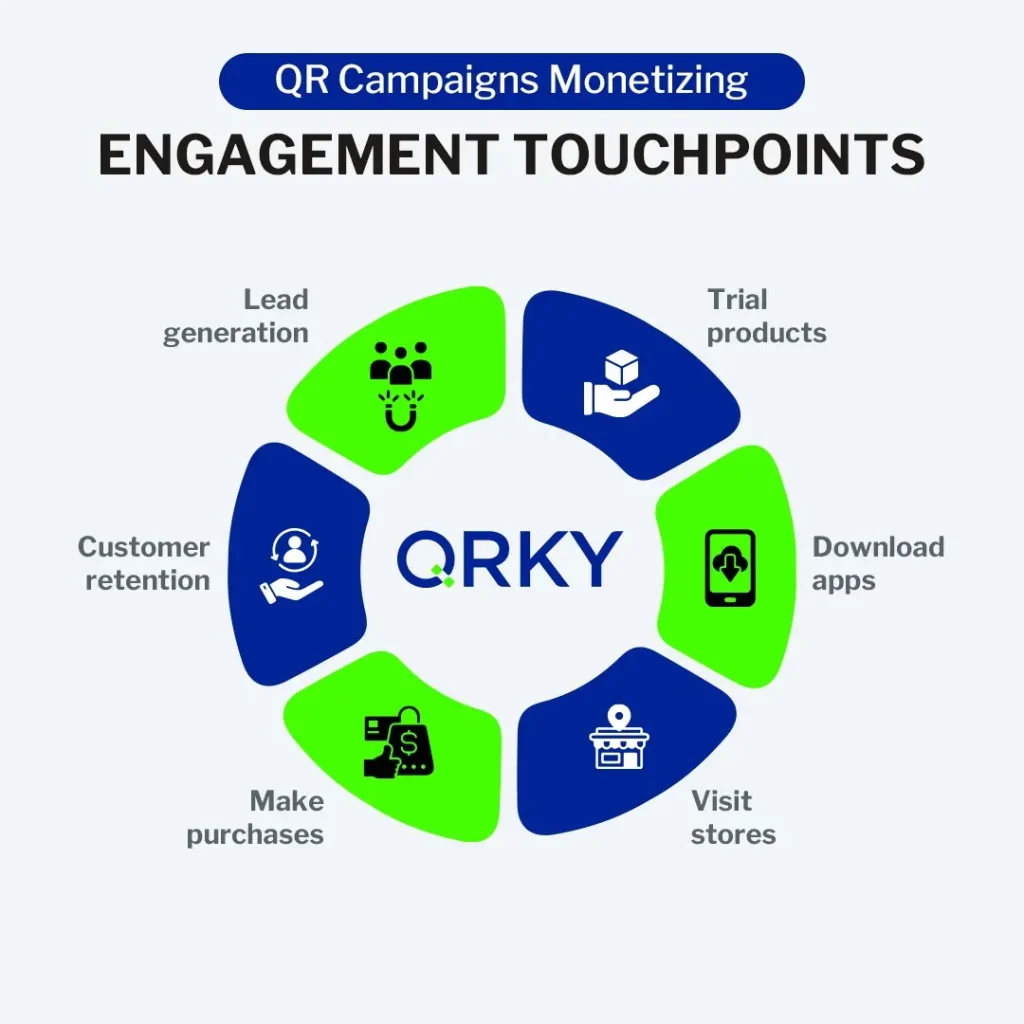
Physical engagement touchpoints and digital conversion tracking have been successfully combined in contemporary QR campaigns.
Thanks to QR code conversion tracking, brands can now tie physical touchpoints to:
- Lead generation
- Trial products
- Download apps
- Visit stores
- Make purchases
- Customer retention
Businesses can observe consumer behaviour rather than estimate its influence. From a finance perspective, this radically changes the conversation.
Marketing offline expenditures can now be justified based on empirical evidence. Performance data provides justification rather than assumptions, and, in doing so, justifies shifting QR campaigns away from marketing experiments and into measurable, accountable growth infrastructure.
The CFO Lens: What Actually Proves ROI
The finance team is no longer concerned with vanity metrics; the engagement for the sake of engagement is meaningless. The primary focus is on economic impact.
QR campaigns are now able to link physical marketing with the following financial metrics:
1. Cost per Acquisition for Offline Channels
By incorporating QR codes, brands can now measure offline customer acquisition costs in the same way as they do for digital channels.
2. Placement Conversion Lift
QR codes on packaging and retail displays are individually tracked to measure the impact of specific physical marketing.
3. Campaign Revenue Attribution
Offline marketing campaigns can now be measured by the number of customers they bring into the sales pipeline and the revenue they close.
4. Lifetime Value Tracking
Through onboarding journeys, brands can tie first engagement to long-term customer value.
This is where campaign performance metrics begin to serve as tools for financial storytelling.
Why Leading Brands Treat QR as Infrastructure
Look ahead: QR codes used to be an ‘adjunct’ of a marketing campaign, but now they’re seen as a permanent fixture throughout the entire customer journey.
For example, retail packaging incorporates QR codes. In hospitality, QR codes transform customer interactions into loyalty ecosystems. In consumer services, QR codes speed up the sequence from interest to purchasing.
Nike and Starbucks are good examples of how digital relationships and robust returns can be established through well-designed integration of physical and digital customer engagement.
The main point is clear:
When QR codes are integrated throughout the customer journey, continuous measurement of customer behaviour becomes possible.
This continuous tracking of behaviour allows for optimization of strategy and the reinforcement of a smart investment strategy.
From Attribution to Optimization
The remarkable aspect of QR campaigns is not just measuring results. It is to improve results.
Once engagement through QR codes is captured, companies can:
- Modify campaign placement
- Fine-tune messaging
- Revise offer optimization
- Shift budget allocation
Instead of guessing what works, companies can make real-time iterative changes to boost performance.
This shifts the traditional marketing ROI from a back-looking measure into a strategy for the future.
What This Means for Leadership Teams
CMOs get measurable narrative storytelling for their campaigns; CFOs get measurable financial transparency, and for CEOs, it’s measurable brand value alignment and growth.
When offline marketing becomes measurable, it will stop competing with online marketing for dollars and instead work together.
When all marketing channels become measurable, marketing shifts from being a cost centre to a growth centre.
Final Thoughts
Offline marketing no longer has to live in the dark when it comes to ROI. With the right QR strategy, every physical touchpoint can become a measurable growth opportunity.
QRKY helps brands transform simple scans into actionable insights, conversions, and accountable revenue impact. If your leadership team wants marketing that proves its value, it’s time to move from visibility to verifiability.
Start building smarter, measurable QR campaigns today.
FAQs:
1. How do QR campaigns help measure the ROI of offline marketing?
QR campaigns connect physical marketing with digital analytics. Each scan generates measurable data such as engagement, lead generation, and conversions. This allows businesses to track how offline campaigns contribute to revenue and evaluate their real return on investment.
2. Why has offline marketing traditionally been considered a cost centre?
Offline marketing channels like billboards, print ads, and events historically lacked reliable attribution tools. Because companies could not track customer actions after exposure, finance teams often viewed these activities as expenses rather than measurable investments.
3. What metrics help prove ROI in QR-based marketing campaigns?
Key metrics include scan rates, lead generation, conversion rates, cost per acquisition, and revenue attribution. These metrics allow companies to link offline engagement with digital outcomes and determine the financial impact of specific campaigns.
4. How can QR codes improve collaboration between marketing and finance teams?
QR campaigns provide shared data that both teams can evaluate. Marketing gains insights into campaign performance, while finance teams can measure revenue contribution, enabling better budgeting decisions and stronger accountability for marketing investments.
5. How can platforms like QRKY support measurable QR campaigns?
Platforms like QRKY provide analytics that track scans, engagement behavior, and conversion activity. These insights help businesses optimize campaign placements, refine messaging, and connect offline marketing efforts directly to measurable business outcomes.