
At first glance, a QR code looks simple. Just a grid of black and white squares.
But behind that grid is a surprisingly strong layer of mathematics—designed to protect data even when the code is damaged, distorted, or partially missing.
This resilience is not accidental. It’s engineered.
Understanding QR code error correction reveals why QR codes are trusted in payments, logistics, and enterprise systems—where data accuracy is non-negotiable.
A User can Scan QR Codes in Nearly Any Setting
The goal when QR codes were created was not to work in a perfect environment. They were made to work in the following environments:
- Industrial packaging
- Printed labels
- Outdoor surfaces
- Cheap materials
The makers of QR codes anticipated the following: defects such as scratches, fading, and even partial obstruction.
Owing to this, QR code makers set out to ensure the codes remain usable even in damaged environments through built-in QR code error correction mechanisms.
A QR Code is More Than an Image
To appreciate the reliability of QR codes, one must first understand the QR code structure, especially when codes are created through a dynamic QR code generator designed to maintain scan stability across different environments.
Every QR code has different parts that serve different functions:
Finder Patterns
They help scanners locate the QR code and determine its position and angle.
Alignment Patterns
They help the QR code scanner keep its position while adjusting the code to different sizes or formats.
Timing Patterns
They help scanners understand how to use the grid to locate the different parts.
Data Modules
They contain the information.
Error Correction Modules
They allow the scanner to recover information even if the code is damaged or has missing elements.
Data is not stored in one specific location. It’s stored in a data grid. This distributed QR code structure is intentional and fundamental to how QR codes function.
Understanding QR Code Error Correction
As explained before, QR codes allow scanners to recover lost or damaged data through QR code error correction. However, that is not the only thing a QR code does.
A QR code also contains information about itself.
This internal info provides the scanners with:
- The ability to detect errors
- The ability to determine parts of the code that are missing
- The ability to reconstruct the code
If the data recovery is successful, the scanner completes the operation successfully. If data recovery is impossible, the operation cannot be completed partially.
The Mathematics Behind It: Reed-Solomon Encoding
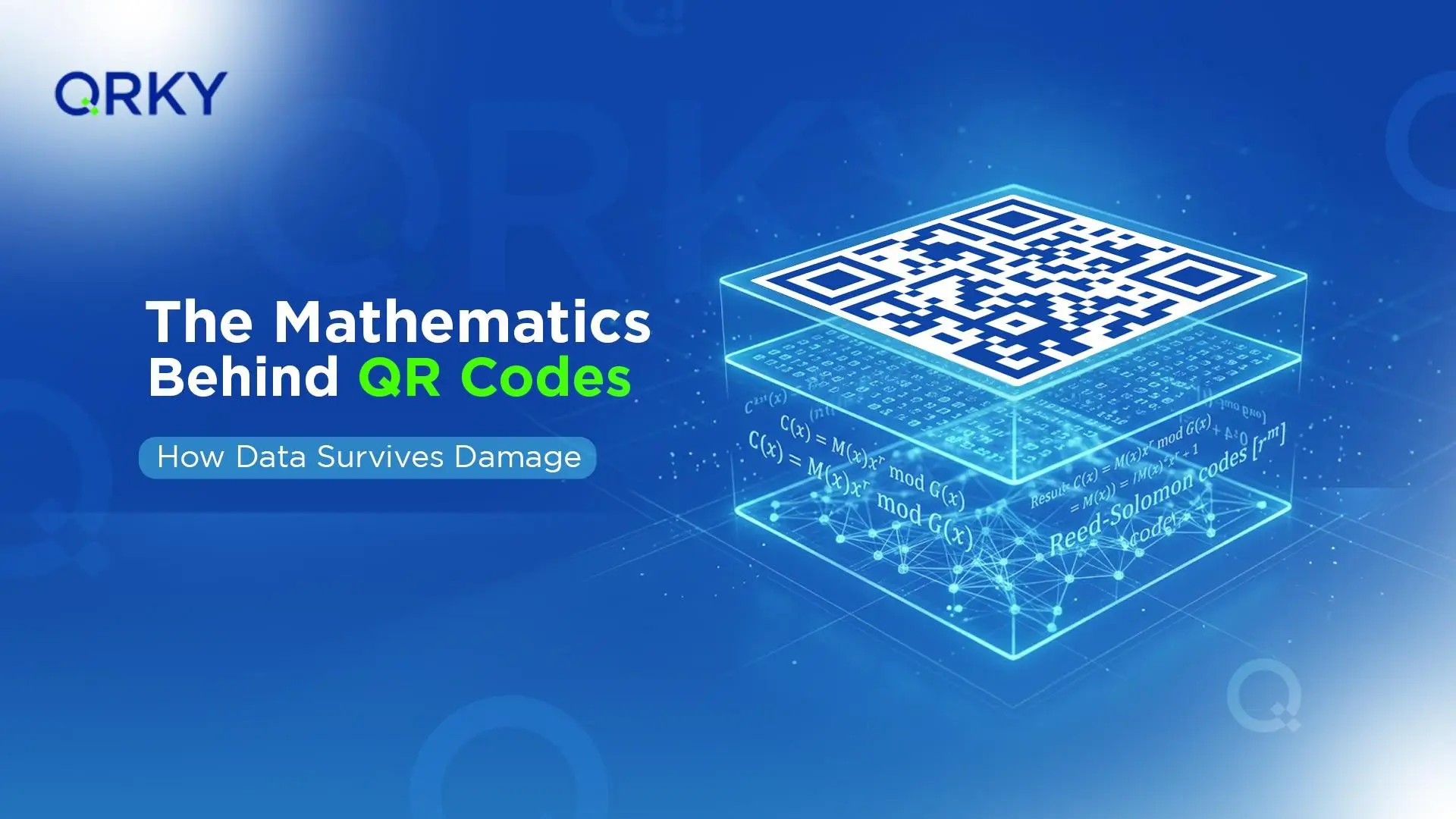
The foundation of QR code dependability is the Reed-Solomon error-correction method. Reed-Solomon Encoding is also used in
- Satellite Communications
- CDs and DVDs
- Highly Reliable Data
The main purpose of the Reed-Solomon QR code Method is to recover the original data when it is incomplete. In the case of QR codes, Reed-Solomon encodes the original data into error-correcting codewords, which serve as a backup plan.
While scanning:
- The scanner analyzes discrepancies
- Detects which components are absent
- Reconstructs the message using the backup information
All of this occurs within milliseconds.
Built-In Flexibility: Error Correction Levels
There are different levels of QR code error correction, each balancing data capacity with damage tolerance. Each attempts to find a sweet spot between capacity and damage.
To put it simply:
If you want to allow a higher degree of damage, you can make the error correction higher. This will lower the capacity.
If you want to increase capacity, you can lower the error correction, but this means there will be greater damage.
In other words, QR codes can be used in a variety of different ways, particularly when they are created using a dynamic QR code generator that allows businesses to adjust design, branding, and functionality without compromising scan reliability:
- Marketing QR codes that have a logo on them
- Industrial labels that will be scratched and damaged
- Enterprise use cases that need to be precise
Why QR Codes Never Return Incorrect Data
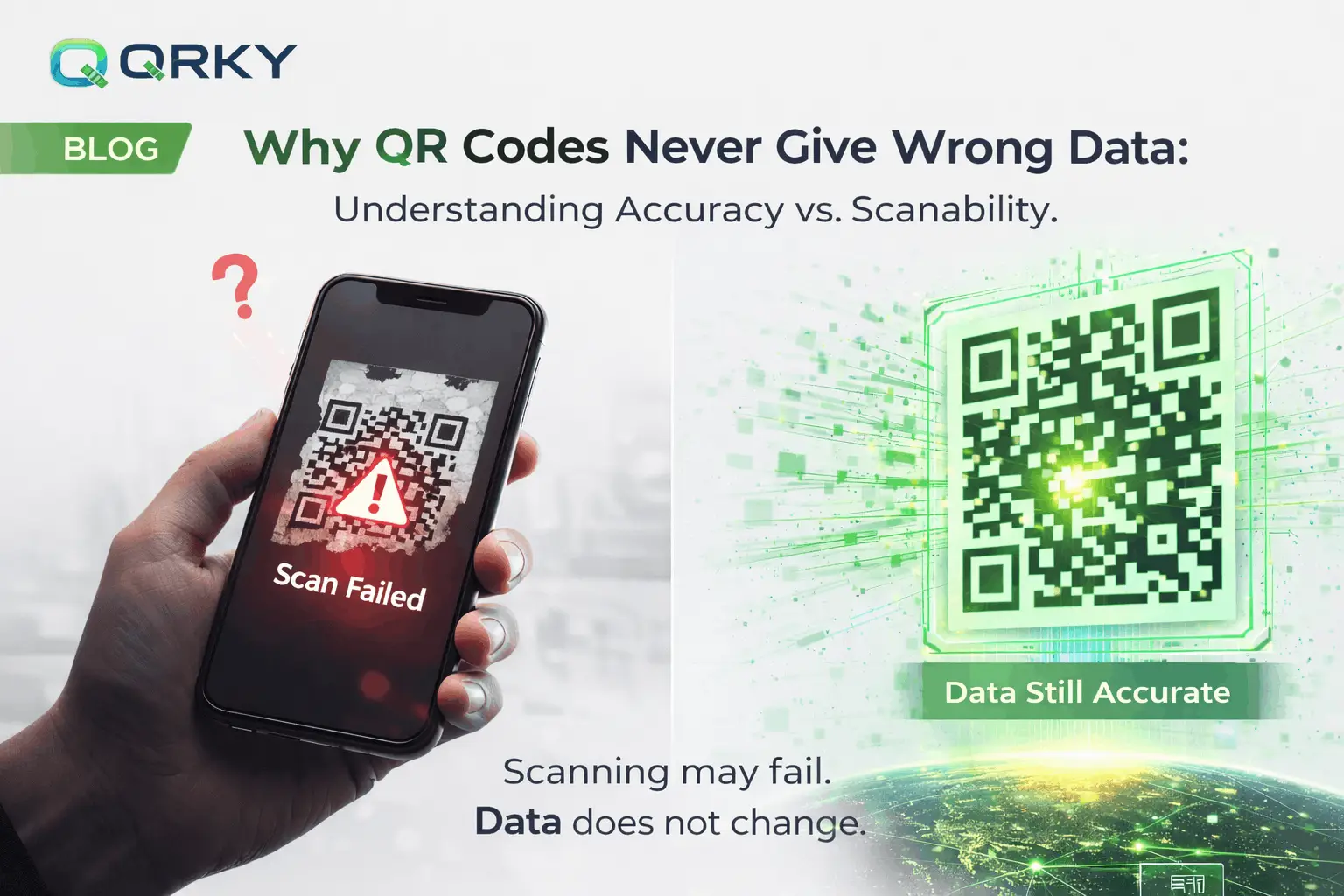
If a QR code can’t reconstruct the original data using QR code error correction, it won’t try to guess.
And it will fail.
This behaviour is what protects the user or system from:
- Incorrect URLs
- Broken redirects
- Garbage data outputs
This was done deliberately from an engineering standpoint.
The no answer is safer than a wrong answer.
How QR Codes Deal With Damage
The data in the QR code is distributed across the grid according to its QR code structure.
That means:
- Adjacent squares don’t store sequential data
- Damage in one area affects small fragments, not whole sections
So even if:
A corner is scratched.
A logo covers the center.
Part of the code is faded.
The remaining data may still be sufficient for reconstruction through QR code error correction.
Why This Matters for Enterprises and Developers
From a technical point of view, the reliability of a system is not about the looks. It is about the promises the system makes and keeps.
The QR code guarantees:
- Predictable behavior
- Data can be retrieved mathematically
- Failure in the system is controlled
This is the reason why the QR code is trusted with:
- Secure access systems
- Payment initiation
- Authentication workflows
- Supply chain tracking
The systems do not rely on assumptions. It relies on math.
The Strength Most Users Never See
In most cases, when a QR code scan is successful, people do not even think about what makes the system work.
They are not able to see:
- Error detection
- Data reconstruction
- Validation checks
These processes are running every time.
- Quietly
- Instantly
- Reliably
This is what makes QR codes flexible and dependable.
Final Thoughts
More than chance, QR codes survive damage because of their expected design. Every time a code is scanned, it is because an algorithm prioritizes accuracy over convenience, and that is what makes QR codes work in practice. They operate in reality.
Trustworthy QR experiences go beyond visual design, and they often begin with a reliable dynamic QR code generator that preserves both scan accuracy and data integrity. They rely on an intelligent QR code structure and robust QR code error correction.
QRKY QR solutions are built with these principles in mind, and flexible error management, consistent performance, and enterprise-level smart solutions.
From safe redirection to purposeful analytics, QRKY QR codes perform optimally, even in less-than-perfect environments. If your business demands precision, durability, and trust in every interaction, QRKY is designed to meet those demands.
Discover how QRKY instills reliability into every QR experience.
FAQs
1. What is the main difference between a QR code and a barcode?
The key difference between a QR code and a barcode lies in data structure and capacity. Barcodes store limited information in a single direction, while QR codes store far more data in a two-dimensional matrix that can be scanned from any angle.
2. Why are QR codes replacing barcodes in many industries?
Businesses are increasingly choosing QR codes because they store more data, connect directly to digital content, and support interactive experiences. In the QR code vs barcode comparison, QR codes offer greater flexibility for marketing, payments, product information, and customer engagement.
3. Are QR codes more reliable than barcodes?
Yes, QR codes are generally more reliable because they include built-in error correction. This allows them to remain scannable even when slightly damaged, partially covered, or printed imperfectly, making them more practical for real-world environments than traditional barcodes.
4. Can QR codes completely replace barcodes?
QR codes are gradually replacing barcodes in many use cases, especially where digital interaction is needed. However, barcodes still remain useful in simple identification systems like retail product tracking, where minimal data storage is sufficient.
5. How can businesses transition from barcodes to QR codes?
Businesses can transition by generating QR codes that link products, packaging, or services to digital content. Platforms like QRKY allow companies to create dynamic QR codes, manage redirections, track scans, and integrate offline touchpoints with digital experiences.