
Almost anywhere we go, QR Codes are there.
On product packaging. On posters. On menus. On payment screens.
We scan and never give it a second thought.
However, there is a very interesting history behind QR codes. The story includes careful planning, design, and exceptional innovation.
To answer the question of what makes QR codes powerful digital tools, we need to start at the beginning. What is the QR code history, how were QR codes invented, and why can we say they are important and powerful digital tools?
The Beginning of the Problem
After the Cold War ended, manufacturing began to change quickly again. Companies were creating more and more parts and they began to collect data and move at an even faster pace.
At that time, barcodes were a routine way to track and collect this data. But they had their limits.
In reality, they could be damaged, had to be scanned in the same direction, and could hold very little data. These problems began to cause delays, resulting in a loss of revenue.
The need for a more efficient, reliable way to record and store data led to the invention of the QR code.
The Invention of QR Codes
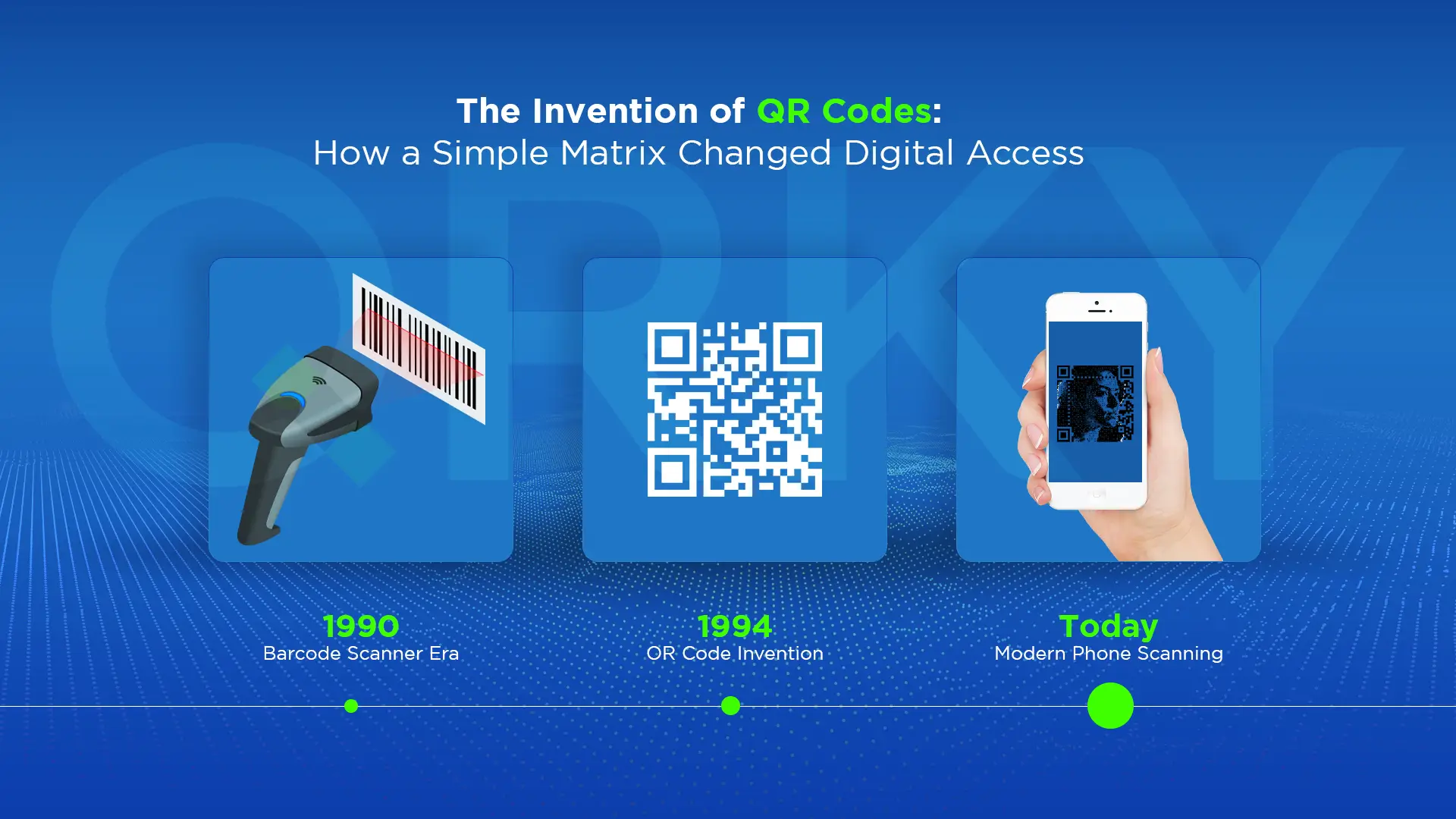
The QR code history and its invention can be traced back to Japan. In 1994, Denso Wave, a Japanese company that is part of the Toyota Group, created the first QR Code.
The project’s chief engineer, Masahiro Hara, often cited as the inventor of QR codes, had an uncomplicated yet ambitious plan. To construct a code that captures data robustly and remains scannable in any orientation.
Instead of using bars, his team used a square-matrix structure. This allowed readers to reference the code in both vertical and horizontal planes.
The product was named the Quick Response code. This was both a marketing ploy and a reference to the code’s speed.
How the QR Code Design Changed the Game
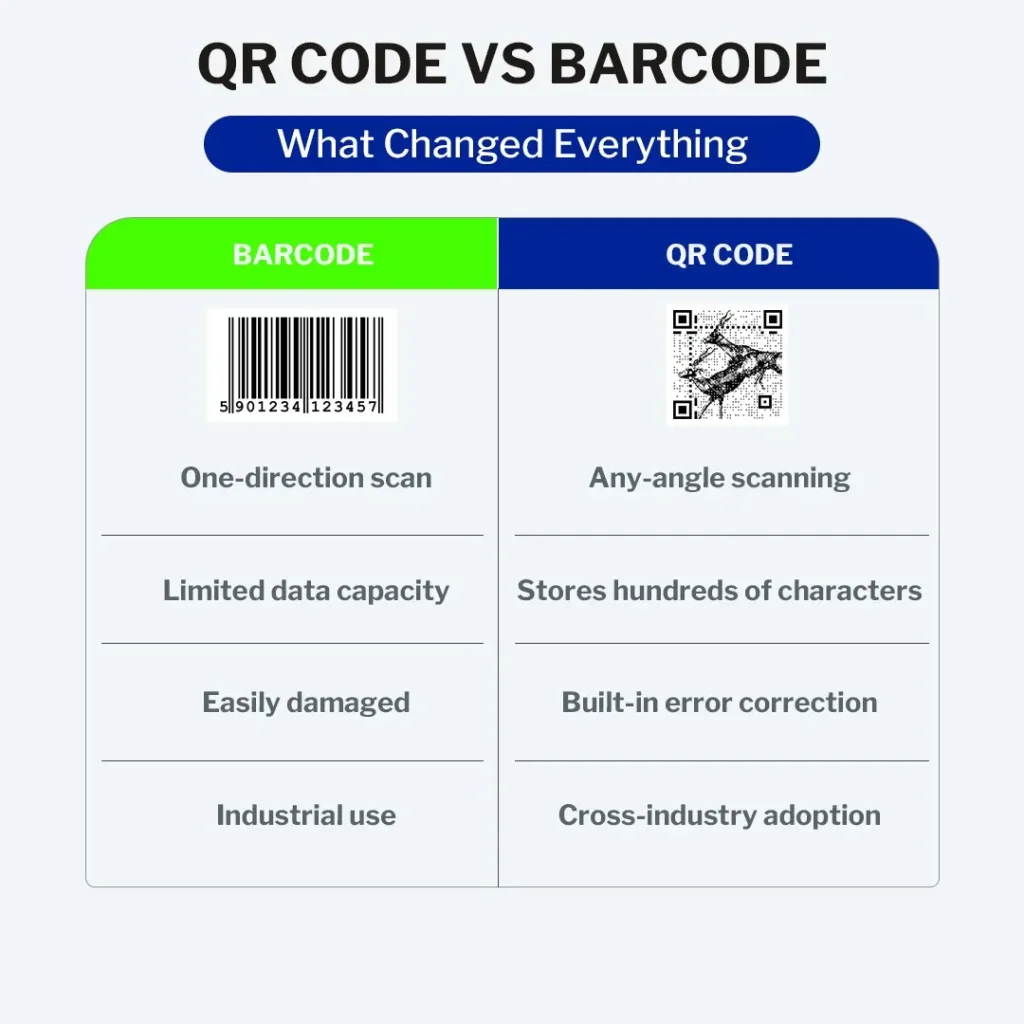
The QR code was a huge improvement over the barcode. It was the first time that a wide range of people could easily obtain information.
Here is the first set of characteristics that sets QR codes above the rest:
• Compared to barcodes, QR codes are capable of recording data and storing it in excess of hundreds of characters
• They allow for scanning to take place in any possible orientation.
• They include a mechanism that retains information, so that even in a damaged state, the latter are still accessible
To the everyday user, this was information they could count on. Partially damaged codes could be scanned to obtain user data.
From this single idea, entirely new modes of thinking and operating emerged across various sectors. New modes of thinking and operating across sectors emerged from new ways of thinking and acting.
Early Adoption in Manufacturing
Initially, QR codes were primarily employed in production.
They were indispensable for monitoring component positions, organising stock, and accelerating supply chains. An important event occurred, as we have stated numerous times.
Denso Wave chose not to profit from the QR code patent. Instead, they decided to keep the code accessible to everyone. This decision greatly impacted the accessibility of digital resources and played a critical role in the continued expansion of QR code history.
It enabled developers to expand its possibilities and also allowed companies to use it. And, of course, smartphones fully adopted it, making it popular.
The Smartphone Era Changed Everything
When mobile cameras started capturing most of the information QR codes provided, they began to be used for more than just factory tasks. The advent of QR codes occurred most significantly when mobile phones became widely used.
The need for separate devices to scan codes was immediately replaced by mobile phones. This replacement transformed QR codes from industry tools to everyday ones, allowing users to scan them to access web links, digital menus, contact information, and payment transactions.
During the COVID pandemic, QR codes became highly useful objects. Their contactless accessibility made them safer and easier to use than printed products. At that point, QR codes became necessities, not options.
Why QR Codes Still Matter Today
Previously, a number of users stated that QR codes were outdated. This assumption has aged poorly.
Contemporary QR codes are visually, interactively, and dynamically modern. They are not just data storage devices. They link the connected world with the unconnected.
The evolution seen across QR code history explains why they continue to adapt to:
• Marketing campaigns
• Digital payments
• Product authentication
• Customer engagement
The foundation was strong, and adaptations could flourish.
QR Codes as a Beginning, Not an End
FAQs
Who invented QR codes and why were they created?
QR codes were invented in 1994 by Japanese engineer Masahiro Hara at Denso Wave to track automotive parts more efficiently. The goal was to store more data and enable faster scanning than traditional barcodes.
What does “QR code” stand for?
QR code stands for “Quick Response code.” It was named for its ability to be scanned rapidly and decoded from multiple angles, making it ideal for industrial and consumer use.
How are QR codes different from traditional barcodes?
Unlike one-dimensional barcodes, QR codes are two-dimensional matrix codes that store information both horizontally and vertically, allowing them to hold much more data and be scanned from any direction.
Why did QR codes become popular worldwide?
QR codes became widely adopted because Denso Wave released the technology without licensing fees, encouraging global use. Smartphone integration and contactless digital interactions further accelerated their popularity.
How did QR codes change digital access and everyday life?
QR codes transformed digital access by linking physical objects to online content, enabling mobile payments, digital tickets, marketing campaigns, and instant information sharing across industries.