
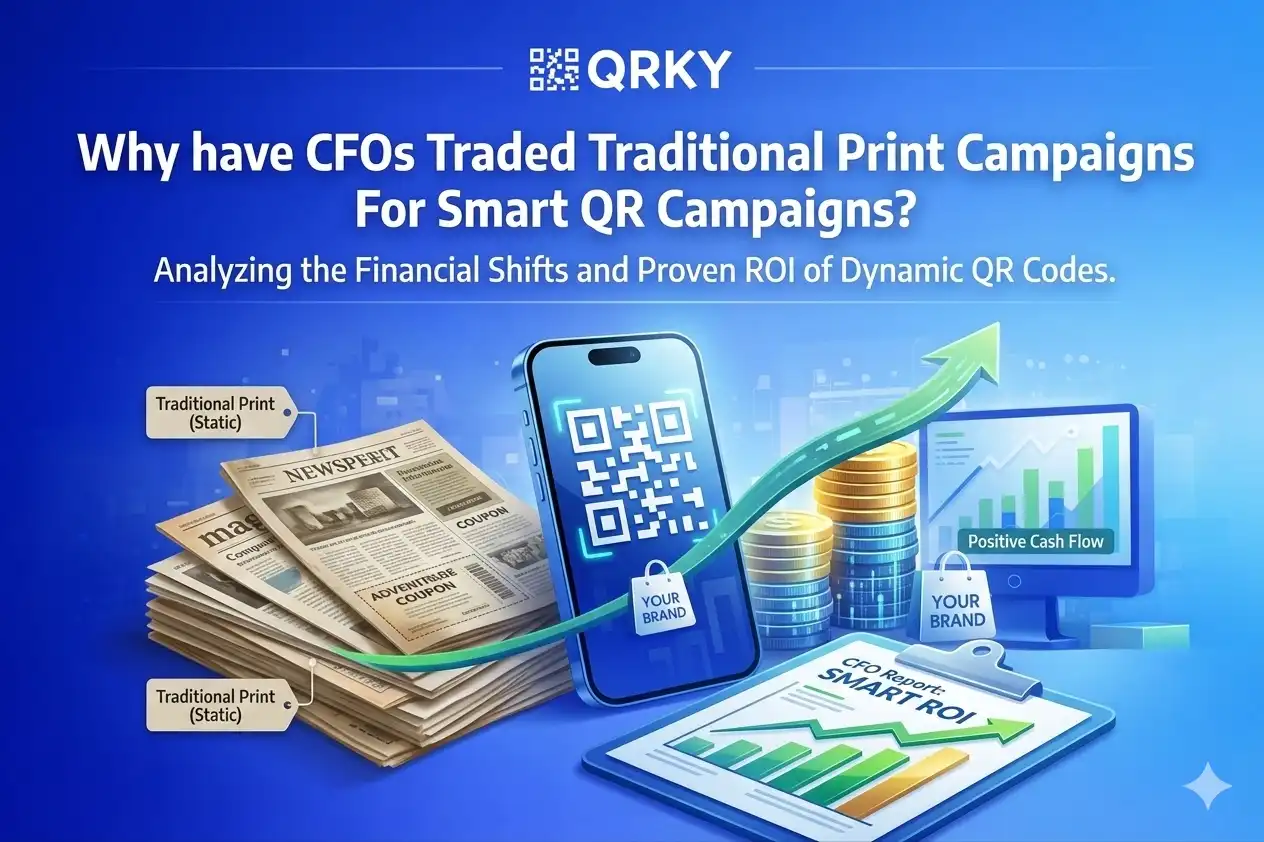
For many years, print marketing has been a staple in a firm’s marketing budget. A brochure provided credibility, a billboard provided visibility, and event marketing collateral demonstrated scale.
However, a different conversation has always taken place in the boardroom.
Marketing spoke about exposure. Finance spoke about accountability. This is where the tension around print and digital marketing began.
In 2026, the tension will ease. This is not because print has disappeared but because print has evolved. Smart QR campaigns have the ability to transform static media into a marketing infrastructure.
The Print Problem CFOs Could Never Solve
Traditional print was not ineffective; it was just impossible to measure the success of print marketing.
A billboard may influence a purchase weeks after seeing the billboard. A brochure may quietly influence someone’s decision. An event stand may spark interest that converts elsewhere.
However, none of these signals appeared on a finance dashboard.
Clearly, in the absence of measurable success, even cost-effective marketing channels become impossible to defend. This is the primary reason a CFO always pushes the budget towards digital. It is not because digital was always better, but because it was measurable.
How Smart QR Campaigns Changed the Equation
With the integration of smart QR codes, every physical marketing touchpoint has the potential to generate measurable engagements, making the QR code for business a powerful bridge between print exposure and measurable digital interaction.
Thanks to QR integration, printed assets can now show:
• Who interacted
• When (and how) they engaged
• Where the scan occurred
• What content they viewed
• If they made a purchase
This changes the print channel to an active channel and gives the ability to measure true marketing ROI.
The change is slighCFO’sbut the impact on marketing ROI is massive.
Why Finance Teams are Getting Behind QR-enabled Print
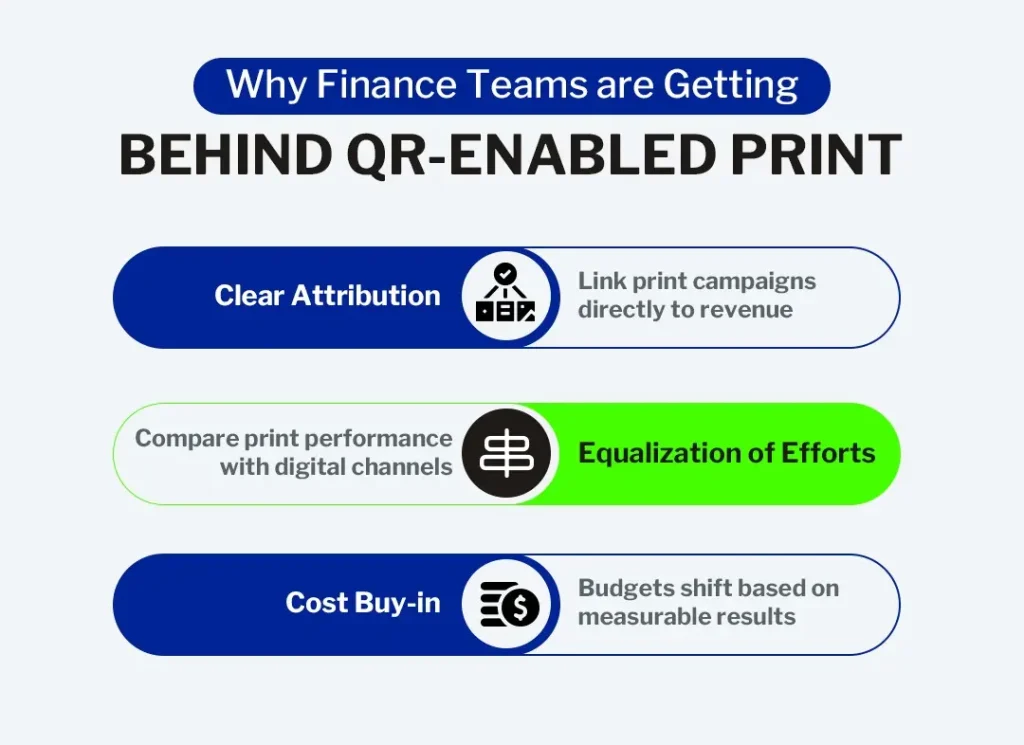
From a CFO’s point of view, QR codes on print assets resolve three persistent issues:
1. Clear Attribution
Once the marketing efforts become revenue-driving, your marketing won’t be considered a cost center.
2. Equalization of Efforts
The performance of print assets can be compared ared to the performance of online channels.
You can evaluate the performance of a brochure in a certain area compared to the performance of a billboard in a different area.
3. Cost Buy-in
Once performance data is available, budget allocation can shift based on the results.
Print can become a variable cost center and an area of focus on a budget.
This is where CFO confidence grows.
What Are the Top Brands Doing
Leading brands in the industry are now upgrading their print assets rather than moving away from print.
Retailers are using QR codes in their packaging to begin the customer journey.
Brands in the hospitality industry are using their stores to start loyalty programs.
Consumer brands utilize QR touchpoints in order to connect offline engagement with online transactions.
Nike and Starbucks show how strategically placed QR codes can transform physical interactions into digital connections.
The core principle here is not about the QR code.
It is about the potential that is held behind the QR code.
QR Campaigns Transform Print into Growth Infrastructure
The integration of QR codes with print materials transforms the role of print within marketing, positioning the QR code for business as a strategic tool for converting offline engagement into measurable growth.
Print is no longer a tool for communication.
Instead, it is a means to facilitate conversion.
Onboarding is initiated through your packaging.
Your billboards serve as points of entry.
Your event materials generate leads.
As a result, finance teams stop questioning if print is effective.
Instead, they begin questioning how much more print can deliver.
Your print marketing will shift from being a cost centre to a growth channel.
What this Means for Leadership Teams
QR campaigns provide CMOs with data that enables them to tell stories with their marketing.
For CFOs, it eliminates guesswork and brings financial clarity.
For CEOs, it brings together the brand’s image with the business.
When marketing channels are measurable, the offline and online divide is no longer there.
What is left is a single growth engine that provides the unified marketing team with a set of tools to build from.
Final Thought: The Future Isn’t Print or Digital — It’s Measurable
The debate is not about print marketing or digital marketing. It’s about the need for visibility.
Digital marketing triumphed due to its measurability. Now, print marketing is revitalizing this element. Innovative QR code marketing shows that print marketing does not need to become intangible, especially when a QR code for business enables every offline interaction to generate measurable insights.
With measurement integrated, print marketing can become accountable, optimizable,calable.
If your print marketing campaigns still function invisibly, they are losing potential. QRKY gives measurable growth opportunities to each printed brochure, billboard, or event asset.
Convert your static marketing to be trackable and give your marketing and finance teams the insight they require. Begin converting your offline marketing to ROI-driven engagement with QRKY.
FAQs:
1. Why are CFOs interested in QR-enabled print campaigns?
CFOs prefer marketing channels that provide measurable results. QR-enabled print campaigns generate trackable engagement data such as scans, user behavior, and conversions, allowing finance teams to connect offline marketing activities with measurable business outcomes and revenue impact.
2. How do QR codes improve the effectiveness of print marketing?
QR codes transform static print materials into interactive entry points to digital experiences. When customers scan the code, brands can track engagement, capture leads, and measure campaign performance, making print marketing more accountable and data-driven.
3. What metrics can businesses track through QR campaigns on print assets?
Businesses can track scan volume, location of engagement, time of interaction, device type, and conversion behavior. These insights help companies evaluate which print materials, placements, or campaigns generate the highest engagement and marketing return.
4. How do QR campaigns help align marketing and finance teams?
QR campaigns provide shared performance data that both marketing and finance teams can evaluate. Marketing gains insights into engagement, while finance can measure return on investment, making it easier to justify budgets and optimize campaign spending.
5. How can companies implement measurable QR print campaigns effectively?
Companies should place QR codes strategically on brochures, packaging, billboards, and event materials. Using analytics platforms like QRKY allows businesses to track engagement, measure conversions, and continuously optimize their offline marketing campaigns.