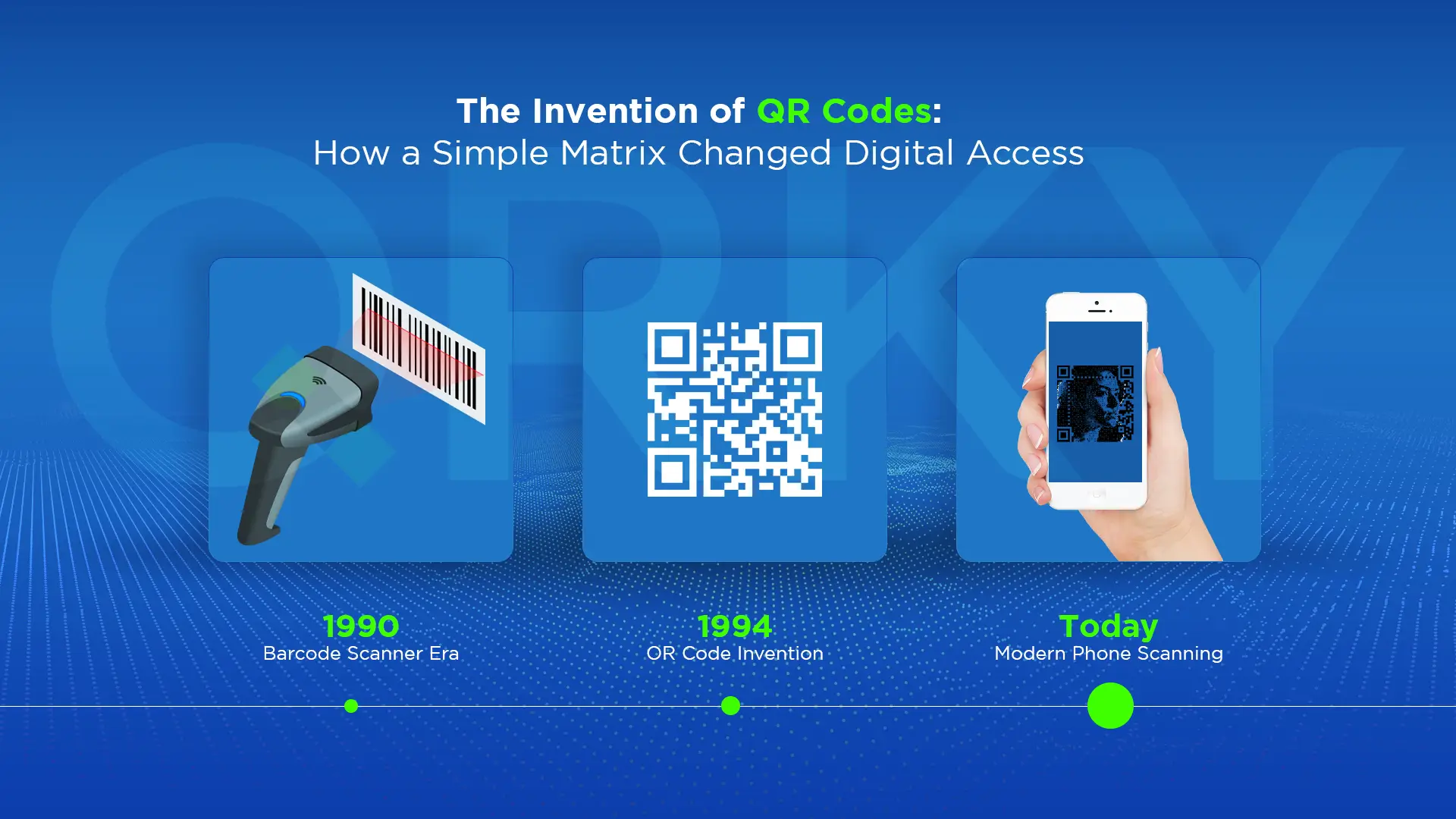

Barcodes have been around for decades. They have scanned groceries, tracked shipments, and powered retail systems worldwide. But today, things have changed.
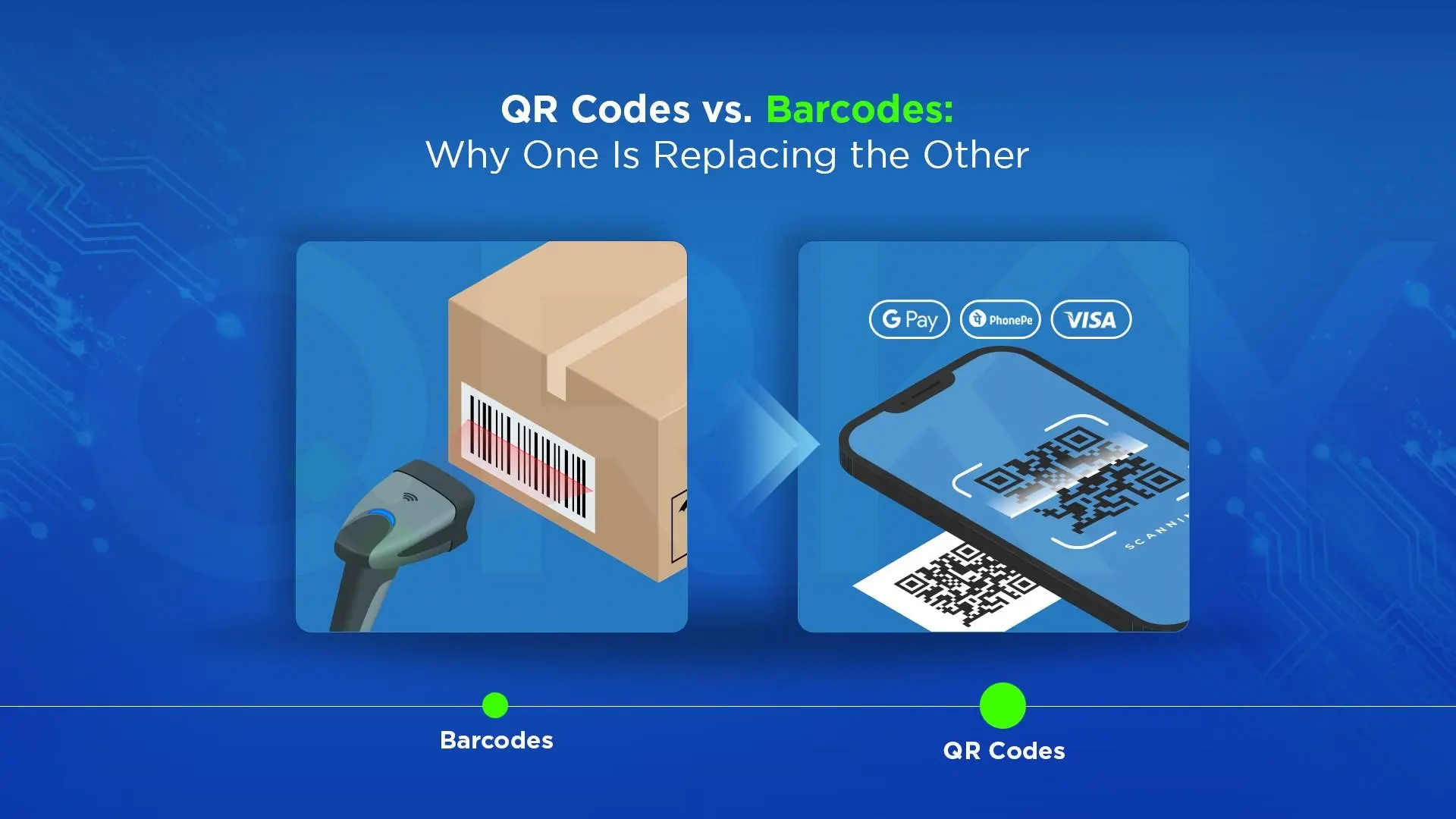
More businesses are choosing QR codes over barcodes. Not because barcodes failed, but because QR codes do more.
To understand why this shift is happening, we need to examine the QR code vs barcode debate, the fundamental difference between QR code and barcode, and the practical advantages that drive adoption.
Why Barcodes Worked for So Long
Barcodes solved a critical problem. They made product identification faster and more accurate.
Furthermore, they reduced manual-entry errors and performed well in controlled environments. For linear, simple data like product IDs, barcodes were enough.
However, business needs didn’t stay simple. As operations became more complex, barcodes began to show their limits, highlighting the growing difference between QR code and barcode capabilities.
The Core Difference between QR Codes and Barcodes
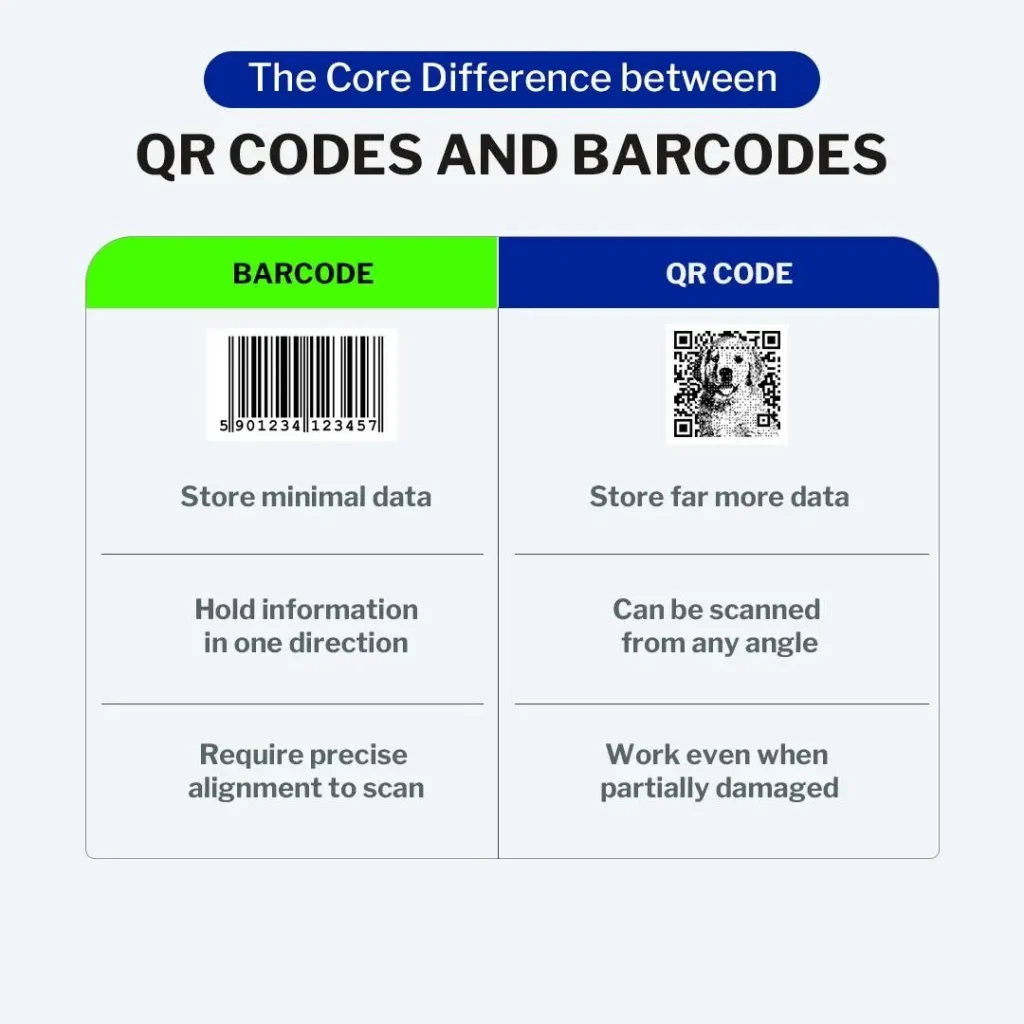
The most significant difference between QR codes and barcodes lies in how much information they can store.
Barcodes:
• Store minimal data
• Hold information in one direction
• Require precise alignment to scan
QR codes:
• Store far more data
• Can be scanned from any angle
• Work even when partially damaged
This structural difference changes everything. QR codes are not just identifiers. In the QR code vs barcode comparison, QR codes are not just identifiers. They are information carriers.
Data Capacity: The Breaking Point
A barcode can store a short numeric value. That’s it.
A QR code can store:
• URLs
• Text
• Contact details
• Product information
• Authentication data
This data flexibility is one of the strongest QR code advantages, especially when businesses use a reliable QR code generation service to create codes that connect directly to digital content.
Instead of pointing to a database entry, a QR code can connect directly to digital content. That single upgrade is one of the biggest reasons QR codes are replacing barcodes in the ongoing QR code vs barcode shift.
Scanning Speed and Reliability
Barcodes require alignment. They need to be scanned horizontally.
QR codes don’t. Thanks to their square design, QR codes can be scanned instantly from any direction.
They also include error correction, which allows them to work even when:
• Slightly damaged
• Printed imperfectly
• Partially covered
This reliability is a clear example of QR code advantages, especially in real-world conditions outside controlled environments.
From Identification to Interaction
Barcodes were built for machines. QR codes were built for people.
That’s a critical shift.
With a barcode, the interaction ends at identification. With a QR code, the interaction begins.
A QR code scan can lead to:
• A website
• A product story
• A digital menu
• A payment flow
• A feedback form
This interactive capability is one of the strongest advantages of QR codes.
Why Businesses are Actively Switching
The move from barcodes to QR codes isn’t theoretical. It’s practical.
Businesses increasingly rely on a professional QR code generation service because QR codes:
• Reduce printing complexity
• Support multiple use cases with one code
• Enable tracking and analytics
• Work across devices
In the QR code vs barcode comparison, a single QR code can replace multiple barcodes and printed instructions. This simplifies operations and improves customer experience.
Design Flexibility Matters More than Ever
Barcodes must remain plain and standardized. Any visual change risks breaking them.
QR codes are different. They can be:
• Branded
• Colour-adjusted
• Integrated into packaging design
This matters in modern marketing and product design. Packaging is no longer just functional. It has become communicative.
QR codes fit naturally into that shift.
Cost Efficiency Over Time
At first glance, barcodes seem cheaper. But over time, QR codes reduce costs by:
• Eliminating reprints through dynamic updates
• Reducing dependency on physical manuals
• Consolidating multiple functions into one code
Instead of reprinting labels or packaging, businesses can update the destination digitally. This long-term value further explains the difference between QR code and barcode cost structures.
Security and Use-Case Expansion
Barcodes are static. QR codes can be dynamic.
This enables additional QR code advantages, including:
• Authentication
• Secure access
• Controlled redirection
As businesses move toward digital-first operations, static identifiers are no longer enough. QR codes adapt. Barcodes don’t.
The Bigger Picture
When comparing QR codes vs. barcodes, the question isn’t which is better in theory. It’s the one that fits today’s needs.
Businesses need:
• Flexibility
• Digital connectivity
• Better experiences
• Measurable interactions
QR codes deliver all of this. That’s why they are becoming the preferred choice across industries.
Final Verdict
Barcodes solved yesterday’s problems. QR codes solve today’s and prepare for tomorrow’s.
They don’t just label products. They connect physical touchpoints to digital journeys.
That’s why, in the ongoing QR code vs barcode shift, one is slowly replacing the other.
If you wish to upgrade from identification to interaction and are still using barcodes, rethink what your codes can do.
QRKY is more than just a QR code generation service. It is designed for companies that require control at scale, flexibility, and dependability. You can manage secure redirections, create dynamic QR codes, monitor performance, and safeguard data integrity at every touchpoint with QRKY.
Without sacrificing scanability or trust, QRKY facilitates a smooth transition between the digital and physical worlds for everything from packaging and payments to authentication and customer interaction.
Get rid of static barcodes.
Use QRKY to unlock more meaningful, intelligent, and secure interactions.
FAQs
1. What is the main difference between a QR code and a barcode?
The key difference between a QR code and a barcode lies in data structure and capacity. Barcodes store limited information in a single direction, while QR codes store far more data in a two-dimensional matrix that can be scanned from any angle.
2. Why are QR codes replacing barcodes in many industries?
Businesses are increasingly choosing QR codes because they store more data, connect directly to digital content, and support interactive experiences. In the QR code vs barcode comparison, QR codes offer greater flexibility for marketing, payments, product information, and customer engagement.
3. Are QR codes more reliable than barcodes?
Yes, QR codes are generally more reliable because they include built-in error correction. This allows them to remain scannable even when slightly damaged, partially covered, or printed imperfectly, making them more practical for real-world environments than traditional barcodes.
4. Can QR codes completely replace barcodes?
QR codes are gradually replacing barcodes in many use cases, especially where digital interaction is needed. However, barcodes still remain useful in simple identification systems like retail product tracking, where minimal data storage is sufficient.
5. How can businesses transition from barcodes to QR codes?
Businesses can transition by generating QR codes that link products, packaging, or services to digital content. Platforms like QRKY allow companies to create dynamic QR codes, manage redirections, track scans, and integrate offline touchpoints with digital experiences.