

Before building an end-to-end QR code system, it is essential to understand its fundamental components: data, patterns, and displays. While these components will get you started, building QR code generator software begins with production.
While the first step in building a QR code system may seem simple, building a reliable QR code generator app for production is far more complex. It must handle carefully planned encoding, multi-level error correction, scaling to extremely large code volumes, and cybersecurity threats. Many systems that perform well in test scenarios will fail in real-world conditions.
This blog aims to provide the necessary resources to help both newcomers and experienced developers build productive, efficient, and scalable QR code systems.
What QR Code Generator Software Actually Does
Although using a QR code generator software might seem as simple as inputting data and retrieving an image, the software must handle a multitude of circumstances:
- Data must be encoded in the QR code correctly without exceeding the code’s limit.
- Data must be correctly stored in the QR code so it can be scanned across multiple devices, whether modern or legacy, mobile or fixed, and remain scannable for years to come.
- Errors must be corrected to demonstrate that the codes are programmed to self-destruct.
Although multiple libraries exist to generate QR code images, a high-quality QR code generator will manage all aspects of the QR code from conception to retirement.
The Building Blocks of QR Systems: Encoding
Every QR code is destined for a single data content type. Whether that data is in the form of a URL, plain text, or a more complex structured payload. The way the data is encoded during the process directly determines system scan reliability, as poorly encoded data will yield a high number of inconsistent scans—and an ineffective value to the system as a whole.
This step may be overlooked, but it determines how robust the QR code generator software will be in real-world conditions.
Error Correction Codes Are Mandatory
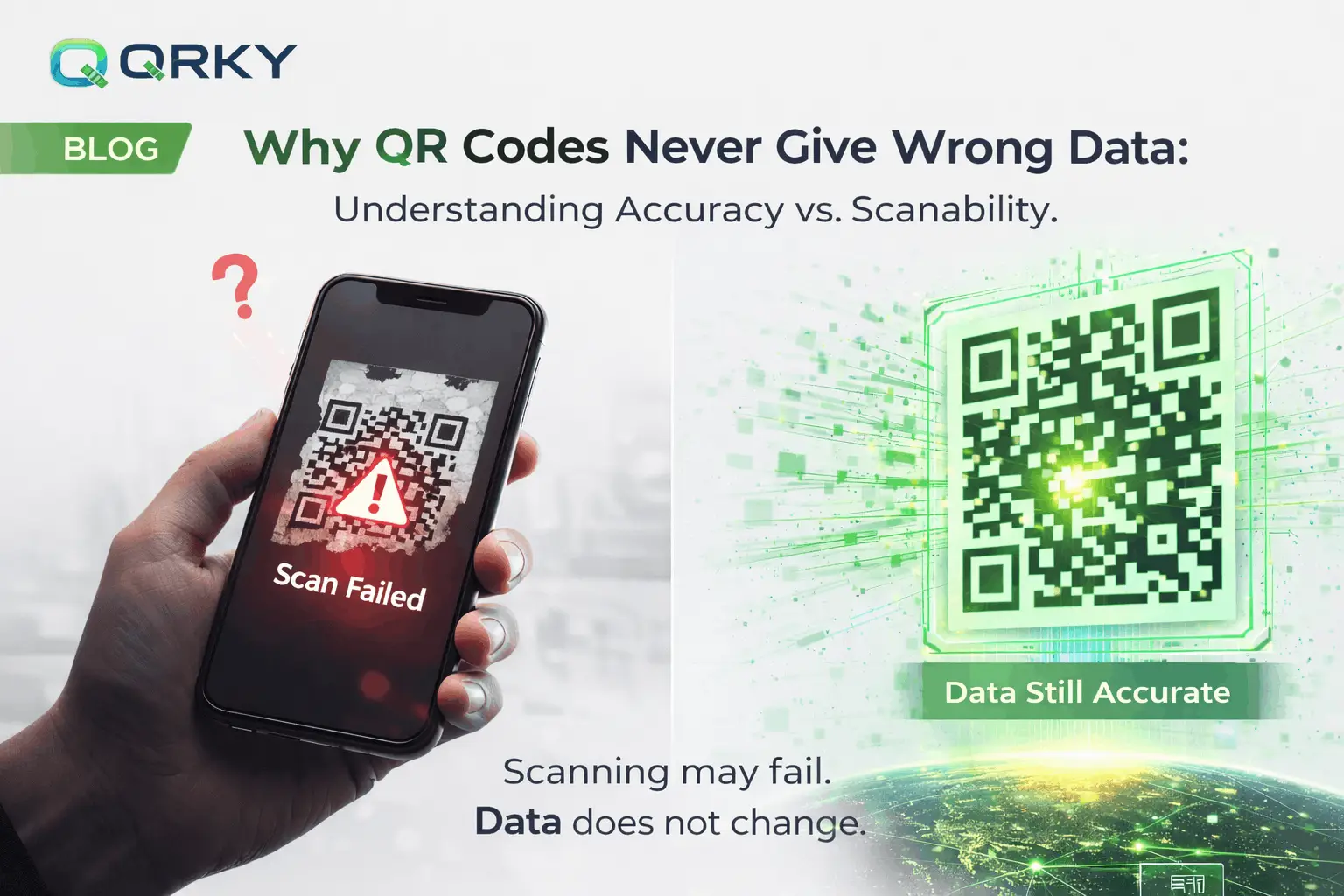
Error correction determines how “damaged” a QR code can be.
With greater error correction, the code can withstand scratches, low-quality printing, or partial cover-up. The downside is that less data can be embedded.
This is a detail that should not be glossed over.
It’s a design choice that depends heavily on the QR code’s location and nature.
Programmatically Creating QR Codes
Rather than generating QR codes manually, modern systems rely on a QR code generator that can create codes programmatically.
This enables automated QR code creation, integration into any workflow, and effective management of large quantities. At this stage, libraries help, but their scope is limited.
As the demand increases, teams often require the following:
- Control over parameters
- Dynamic data support
- Consistent outcomes across all environments
This is the point where basic scripts become insufficient.
Static and Dynamic QR Codes
Static QR codes contain all the data within the code itself.
Dynamic QR codes redirect you to a URL, which can be changed at any time.
What dynamic systems allow:
- Content updates that don’t require reprinting
- Control at the campaign level
- Enhanced tracking and reporting
However, once teams create QR codes programmatically with dynamic logic, additional challenges arise. Redirect logic, performance, and uptime become crucial. A generator alone cannot handle this complexity.
The Importance of a QR Code API
In the case of a generation at scale, most teams use a QR code API.
QR code API facilitates standardized generation, redirect management, and systems integration. They also make it easier to maintain consistency and security.
However, different APIs offer different capabilities. Some only offer code generation. Some handle the entire QR lifecycle, including updates and tracking.
Selecting the right QR code API early helps avoid costly architectural changes later.
Analytics: The Complicated Side of QR Systems
Analytics are a big part of the opportunity provided by a QR code.
Teams want to know:
- When do scans occur?
- Where do scans occur?
- What are the most effective use cases?
This type of tracking needs event tracking and data collection, as well as a design that takes privacy into account. For many teams, the analytics component is more complicated than the generation component.
Security and Abuse Considerations
If QR systems are not built with certain safeguards, they can be abused. Systems without the proper safeguards can have issues with redirect misusage and spoofed URLs. Production-ready QR code generator software must include validation, access control, monitoring, and audit mechanisms.
Security is not something that can be tacked on to make a system functional.
From the beginning, it must be part of the architecture.
Testing Under Real-World Conditions
A QR code that appears to function on a developer’s screen might not scan in the real world.
Testing must be done against:
- Diverse devices and cameras
- Different lighting scenarios
- Digital and printed media
Scan reliability is best tested in imperfect environments rather than in perfect ones.
Built vs. Buy: A Practical Reality Check
Most teams start by building their own QR code generator, assuming it will remain a simple internal tool.
With time, however, many begin to realize there is significant scope creep. The maintenance burden becomes significant. Edge cases multiply. Feature requests increase.
A tool that started as a simple code generator begins to expand into a full-fledged platform.
At this point, the challenge shifts from building the tool to maintaining it.
Last Thoughts
There is intrinsic value in developing QR code systems.
However, there is much more to reliable, scalable QR systems than simply generating codes. It takes systems design on encoding, APIs, analytics, and security.
That is where the larger portion of the work resides.
Developed for Developers – Designed for Scale
When building QR systems from the ground up, the first thing you realize is the complexity of the system’s design, from encoding and data correction to QR code API design, analytics, and security.
QRKY is constructed to manage such complexities at scale. With developer-first APIs, dynamic QR code control, top-tier analytics, and reliability, QRKY provides scalable teams with a solid foundation without added complexity.
If you need more than simple QR generation, QRKY is built for advanced systems.
Discover QRKY’s developer-oriented QR platform.
FAQs
1. What is QR code generator software?
QR code generator software is a system that converts data such as URLs, text, or product information into a scannable QR code image. Advanced solutions also manage encoding, error correction, dynamic redirects, analytics, and large-scale QR code generation.
2. How can developers create QR codes programmatically?
Developers can create QR codes programmatically using programming libraries or a QR code API. These tools allow applications to automatically generate code, embed dynamic data, and integrate QR functionality into websites, mobile apps, or backend systems.
3. Why is error correction important when generating QR codes?
QR code error correction ensures that a code remains scannable even if part of it is damaged, blurred, or partially covered. By storing redundant data inside the QR matrix, scanners can reconstruct the original information reliably during scanning.
4. What is the difference between static and dynamic QR codes?
Static QR codes permanently store the encoded data inside the code itself. Dynamic QR codes redirect to a managed URL, allowing businesses or developers to update the destination, track scans, and manage campaigns without reprinting the code.
5. Should businesses build their own QR code system or use an existing platform?
While building a QR code generator internally offers flexibility, maintaining encoding logic, security, analytics, and infrastructure can become complex. Platforms like QRKY provide scalable APIs and management tools that simplify QR code deployment and lifecycle management.