
Image-based QR codes are everywhere.
They are at the movies.
They are on food.
They are even on posters.
With so many QR codes everywhere, people are starting to get creative with their QR codes to make them more interesting to look at.
However, this raises the important question on the mind of everyone when they look at these creative codes,
“Will these codes still work?”
Creative image QR codes are not the first to try to get attention, but they are one of the most popular to have people question their functionality.
What are Image-based QR Codes?
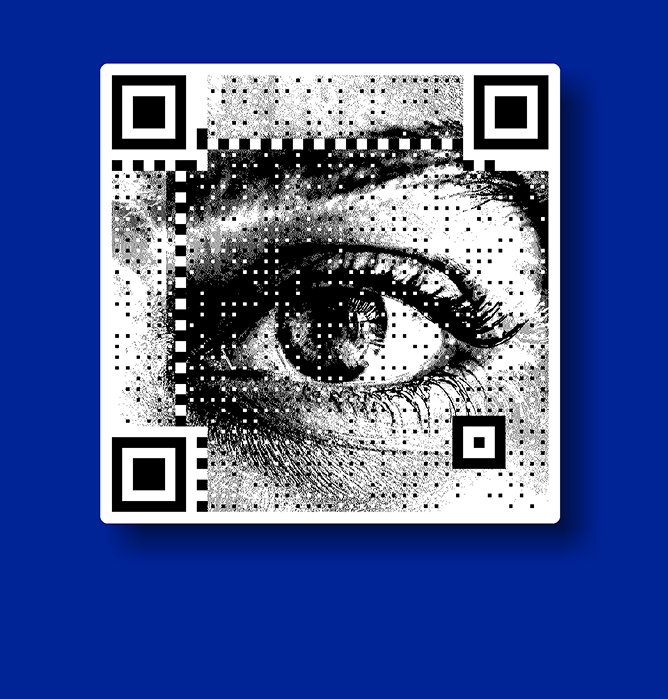
Image-based QR codes are QR codes where some of the traditional black-and-white elements are replaced with art or visuals using an image QR code generator.
These include:
- Brand logos
- Custom shapes
- Illustrations
- Colours
The objective with these codes is to still have the QR code work and not lose functionality to make the code more interesting.
This is a lot harder than most people think.
Why is there a Problem with Scan Accuracy
Scanners look at and can figure out how to break down the contrast, the structure, and alignment of the code.
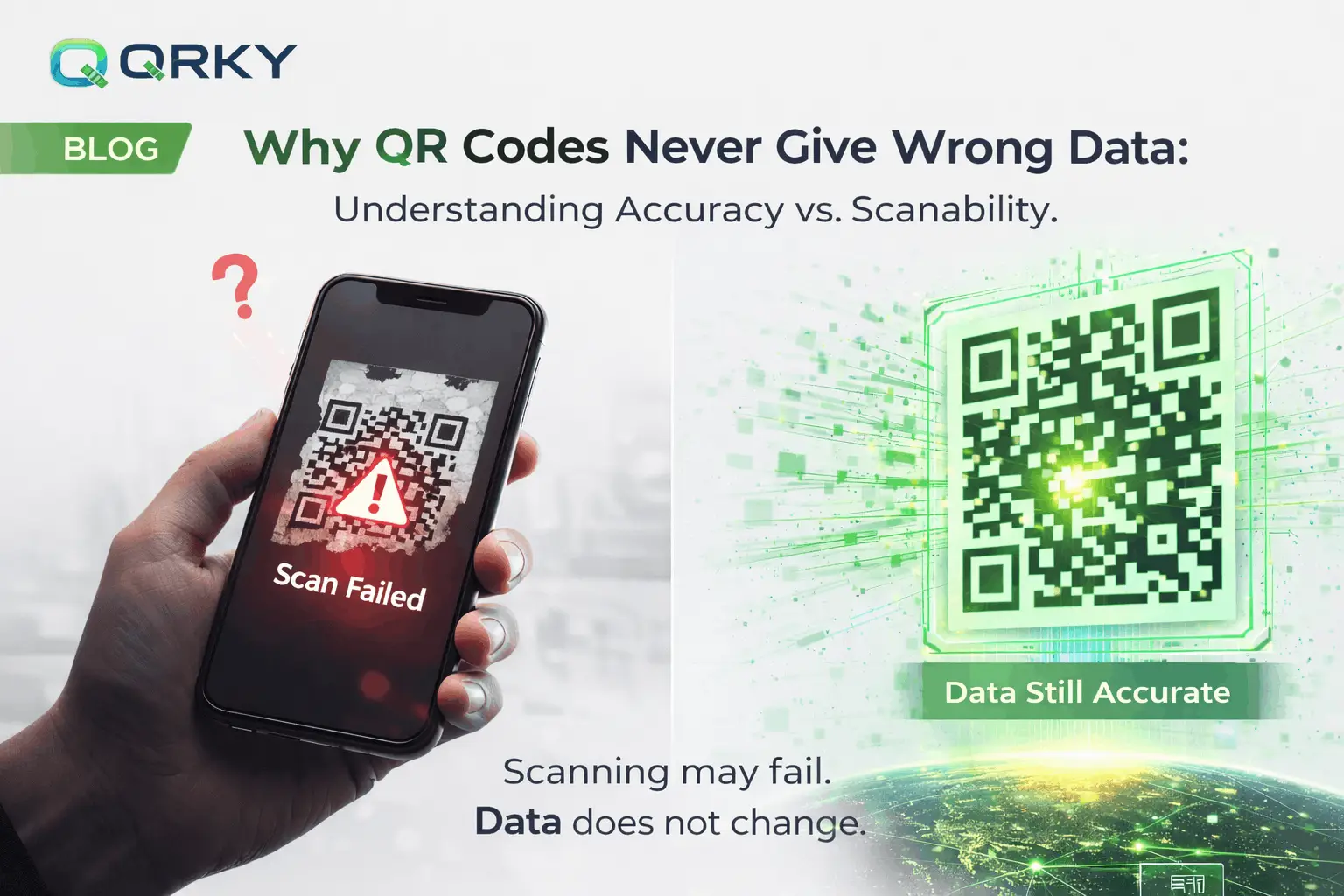
When the structure is changed, or parts of the code are changed or cut out, the scanners are left with little to no margin for error in highly detailed scans.
One of the most common reasons why a code won’t scan is:
- There is not enough contrast to scan the code
- The scanning template is obscured by some image
- And the code is just too detailed and overdesigned.
This is why many of the first artistic QR codes that were created didn’t work.
Creating a design that didn’t include intelligent thought of the code made for less trustworthy scans.
What do image-based QR Codes do?
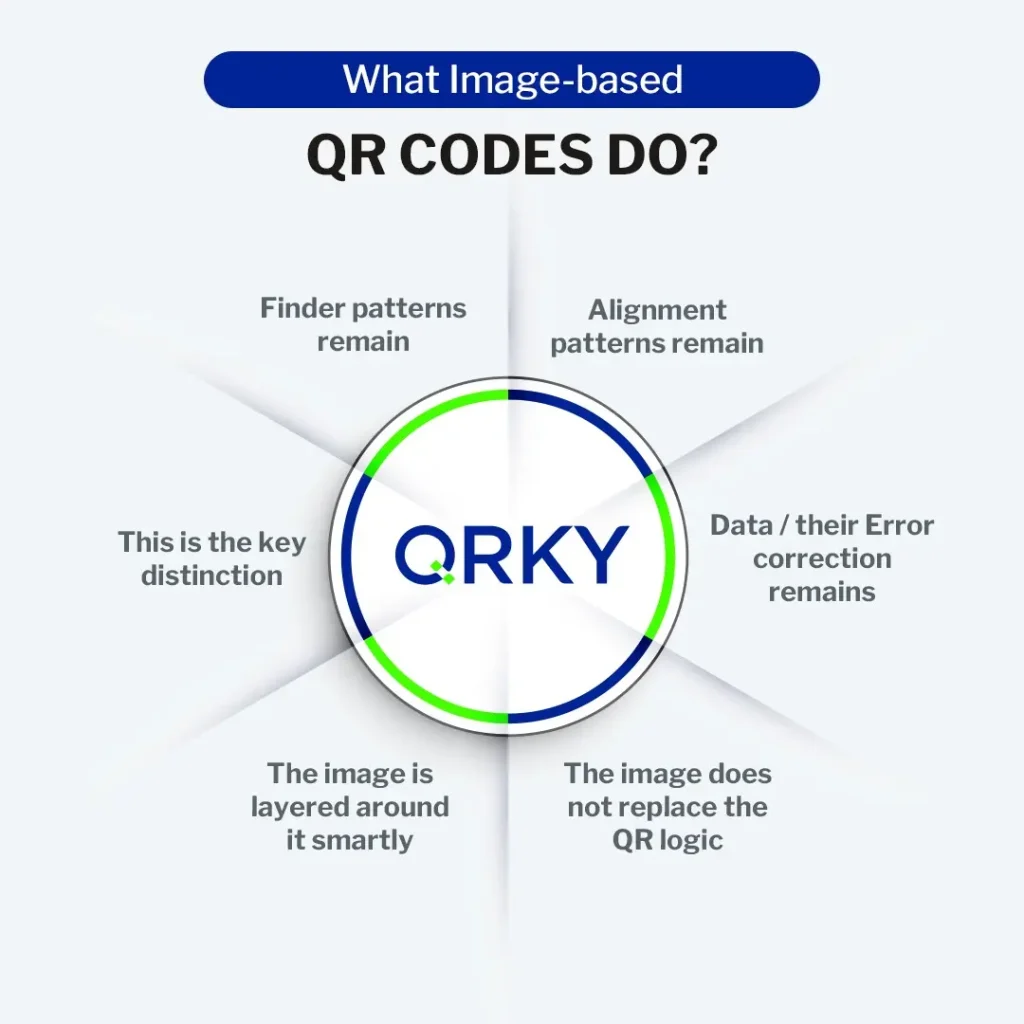
Although it may look like image-based QR codes have a lot of modifications, in reality, they mainly just use the same structure. For the design layer:
- Finder patterns remain
- Alignment patterns remain
- Data / their Error correction remains
- The image does not replace the QR logic
- The image is layered around it smartly
- This is the key distinction
The Role of Error Correction in Image QR Codes
Image QR codes would not exist without error correction.
Error correction enables portions of the QR code to be obscured, manipulated, or visually altered.
Correcting code errors is done while error correction has its limits.
If no planning is done, the design will severely overwhelm the recovering. The rest gets automated.
How Automated Design is Revolutionary
The latest generation of tools, including advanced image QR code generator platforms, has completely moved past design guesswork.
Rather, they analyze the following:
- Design smart
- Contrast ratio
- Pixel density
- The probability of it scanning
- How the device interacts with the QR code
What Artistic QR Codes Require to be Functional Most
An artistic QR code needs to work like a QR code.
Design freedom without limits leads to:
- Inconsistent scanning
- Device-dependent scanning failures
- Scanning frustration
- User frustration is a by-product
Smart design systems contain most of the design freedom, all of it.
Scan Accuracy is a Business Metric
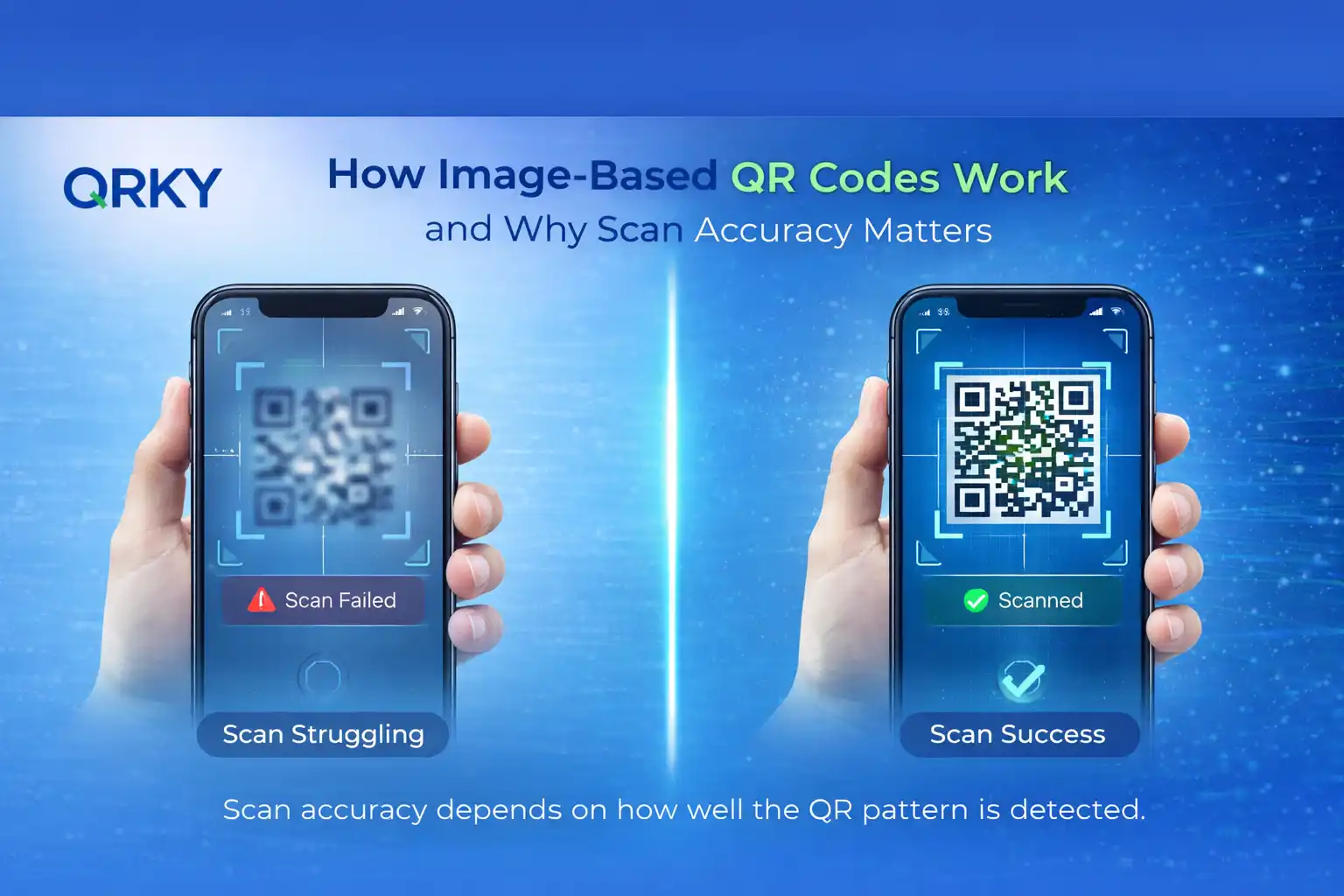
Scan accuracy isn’t a technicality.
It encompasses:
- Campaign performance.
- Client/customer engagement.
- Brand perception.
A QR code that doesn’t scan is invalid, design notwithstanding.
For customer-facing implementations, ultimate reliability is non-negotiable.
Design enhances stimulus only when scanning is facile.
Real-life scenarios > Demonstrations
A QR code that works on a designer’s device may not work on other devices
Real-world scanning involves:
- Insufficient illumination
- Obsolete camera technology
- Glare & reflection
- Printed background surfaces
Testing image-based QR codes in the conditions above is a prerequisite. That’s where image-based validation makes the most sense.
What makes QRKY different
Unlike most competitors or basic image QR code generator tools, QRKY views image-based QR codes as engineered systems, not mere visual art.
With this, QRKY:
- Ensures design choices honour the QR code’s inner workings
- Maximizes error correction
- Tests the reliability of scans before implementation
The outcome is unlimited creativity unleashed.
Predictable performance + Creative design.
Final Thought
Image-based QR codes are not unreliable by default.
They become unreliable when the design obstructs the QR code’s structural elements.
With sufficient intelligence and technology, QR codes can be expressive, branded, and reliable simultaneously.
That is the balance QR systems of modern technology strive to achieve.
Creativity without Compromised Scans
Reliably, uniquely designed QR codes are a priority at QRKY.
With design QR codes, QRKY assures that every design is created to work in real-life, fully scannable conditions.
QRKY utilizes real-world scanning assurance and creative design flexibility so brands can confidently avoid scan fails and user irritation.
If you want your QR codes to stand out and work efficiently, QRKY can help you design a perfect balance for you.
FAQs
1. What are image-based QR codes?
Image-based QR codes are QR codes that incorporate visual elements such as logos, colors, illustrations, or custom shapes. These designs are created using an image QR code generator while preserving the core QR structure so the code remains scannable.
2. Do image-based QR codes scan as reliably as standard QR codes?
Yes, image-based QR codes can scan reliably when designed correctly. As long as essential QR elements like finder patterns, alignment patterns, and error correction areas remain intact, scanners can still decode the embedded data accurately.
3. Why do some artistic QR codes fail to scan?
Many artistic QR codes fail because the design disrupts the code’s structure. Low contrast, excessive visual detail, or covering key scanning patterns can prevent scanners from recognizing the code and reconstructing its data correctly.
4. How does error correction help image-based QR codes work?
QR code error correction stores redundant data across the code. This allows scanners to reconstruct missing or obscured portions of the QR code, enabling image-based designs to remain functional even when parts of the code are visually modified.
5. How can businesses ensure their image-based QR codes remain scannable?
Businesses should maintain strong contrast, protect essential QR patterns, and test codes across multiple devices and lighting conditions. Platforms like QRKY help generate image-based QR codes that balance creative design with reliable scanning performance.